
Hi, 5 Finnish Holidays as Experienced by an International Student

One of the most interesting things about living and studying in a different country than that in which you were born is how you experience their holidays. Here are five Finnish holidays as experienced by yours truly, the author, a North American living in Northern Finland.

Easter

Easter, also known as pääsiäinen in Finnish, is a national public holiday, which means we get to have some free days off work and school. As with most celebrations in Finland, there is special food that is only eaten during this time of the year.

The most interesting one is mämmi, a traditional Finnish dish made out of malted rye. During Easter season, you can find mämmi in every store. Mämmi does not look very appealing, having the texture of glue and sandpaper or thick raw petroleum. I would describe eating mämmi for the first time, with all due respect, as eating bitter jam with sand and warm beer. Since mämmi is traditionally served with cream (or vanilla cream), the combination of flavors becomes quite pleasing. In the past, I have ended up eating cream-with-mämmi instead of mämmi-with-cream, since I prefer the cream taste over the mämmi taste.

However, from personal experience, the acquired taste for mämmi develops over time as with salmiakki. Nowadays I look forward to eating it every year.   


May Day

The legendary May Day vappu (or wappu if you’re an engineering student) is perhaps the most eventful time of the year for students. The actual holiday is on the first of May, but for many Finnish students, the celebrations start two weeks before. There is a myriad of parties and events dedicated to student life and the coming-of-age of the freshmen (fuksit).

In Oulu, one of the most interesting vappu events takes place in Åström Park, where engineering freshmen are dipped in the cold spring water, where they come out as Engineering Students (teekkarit). For non-students, May Day is a national holiday during which they can wear their student caps or teekkari caps.

As a former engineering student, getting dipped in the cold water in front of hundreds of onlookers is scary. The water is maybe just a few degrees above zero and as soon as you are inside, the cold water feels like knives poking into your body. However,  luckily there’s normally a mobile sauna around to regain your heat with the other Finnish students. This was perhaps one of the moments when I felt the most integrated into Finnish student culture.


Midsummer

Known as juhannus, Midsummer is a national holiday celebrated every June on a Saturday between the 20th and 26th. For Finns, this holiday is all about going to cottage, grilling, going to sauna, and swimming in the lake. Many Finnish families have their own or a shared cottage to where they can escape civilization for a little while.

If you’re a foreigner and have good Finnish friends, you are likely to be invited to join them in their trip to their cottage. I was invited once to a cottage in Savonlinna where, as usual, I was the only foreigner in the group. I got to grill, make new friends, go to sauna, and wash myself in the cold lake.

Unlike during wappu, the lakes by June are much warmer, so swimming was much more pleasant. I even went fishing with my Finnish friend and I caught something called a “rubbish fish”, roskakala, which is not normally eaten.


Halloween

Even though not technically a “holiday”, Halloween has gained popularity over the years worldwide. In Oulu, Halloween was barely talked about in 2010. Back then I had to organize my own party and urge the guests to come in costumes.

A few years later, I finally got my wish of a party downtown in a club with Halloween theme. I was super excited and went crazy sourcing materials from all around the world to make my costume. I managed to win the costume contest, but sadly, at the time of writing this, I no longer remember what I won.

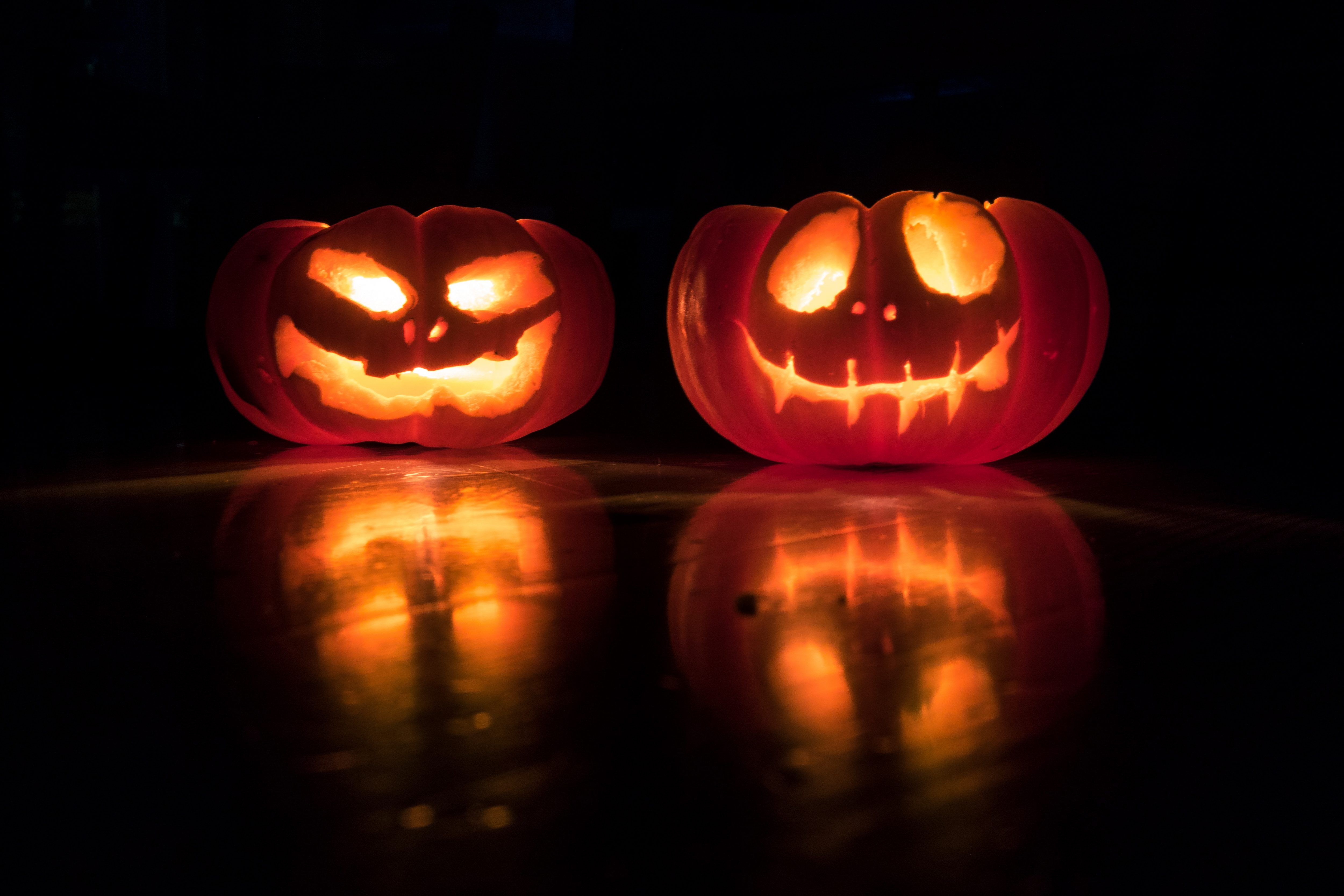
Over the last 8 years, Halloween has seen a rise in popularity in Oulu. This year, Halloween events were all over the place during October, particularly student parties. As a person who absolutely loves scary jack-o-lanterns, ghosts, critters, and costumes, I’m pleased about the rise in popularity of this great celebration.


Christmas

Christmas, known as joulu in Finnish, is perhaps the most amazing Finnish holiday. Interiors and exteriors are decorated with beautiful lights, elves, and Christmas trees. Compared to North American decorations, Finnish decorations tend to be more tasteful and less extreme. In my experience, Finns are not trying to have the brightest lights or the most exotic decorations, but rather bring the Christmas spirit to their homes.

One of the Christmas goodies is a warm drink called glögi. Glögi is a spicy and sweet drink which may or may not contain alcohol. You may also add some almonds and raisins to the drink. The first time I tried it, it reminded me of German glühwein, which is also a Christmas drink.

Another traditional food is rice porridge, riisipuuro. Traditionally, in a large pot of rice porridge, a single almond is hidden. It is said that whomever receives the almond in their plate will have great fortune.

After years in Oulu, I still don’t like rice porridge and I’ve never gotten the sneaky almond; perhaps that is why I don’t like it. I am used to sweet rice porridge like the one I would eat at home. In Finland, however, the rice porridge is not sweet and even has some salt. When eating porridge with my coworkers during Christmas season, I was the only one drowning the porridge in sugar to make it palatable to my taste.

As a foreigner you might have the chance to be invited to a friend’s Christmas dinner. But if you don’t, don’t feel bad, since Christmas in Finland is mostly about family getting together. You can also get together with other foreigners and make your own Christmas dinner.

However, if you happen to be in a relationship with a Finn, you will most likely be required to attend the family reunion where you will be treated as family. I feel fortunate to have been able to experience both a foreigner Christmas and a family Christmas in Finland.


Read moreHi, 5 ways to survive the holidays while living abroad.

Marcelo Goldmann

A Doctor of Chemical Engineering from the University of Oulu. "Life is like a rubber duckie, you gotta keep it afloat to see its splendor." Instagram: @marcelogman

Lue lisää:

What is Halloween & Why Should I Care? An American perspective on the spookiest day of the year

This year, Americans are expected to spend $9 billion on Halloween. This breaks down to $86.79 per person, spent on costumes, candy, drinks, and decorations. All of this money being spent on one day prompts many around the world to wonder what this holiday is all about. Morgan Neering tells us why October 31st is one of the top three best days of the year, and how she plans to spend it in Oulu.

TEKSTI Morgan Neering

KUVAT Morgan Neering

To some, October 31st is just another day. For me, however, it’s one of the top three best days of the year, just behind Thanksgiving and Christmas.

In America, and in many places around the world, October 31st marks the day of Halloween; a spooky celebration filled with costumes, trick-or-treating, and pumpkin carving. Stores become filled with pumpkins, costumes, candy, and the movie classics, as everyone prepares for the final day of the month. Everything becomes pumpkin flavored; coffee, pies, muffins, and more, and people everywhere seem to be in the festive spirit. 

Granted, I may just be an (overly) festive person, but October is always one of the most exciting times of the year.

And I’m not alone, nearly 70 percent of the total U.S. population who were polled are planning to participate in Halloween festivities this year. The other 30 percent, well, they’re missing out.

Throughout my time in Finland, I’ve seen stores filled with spooky decorations, Halloween candy, and of course, pumpkins. While in America, this is the season to prepare your pumpkins for a long stay on the front porch, but here, pumpkins seem to be used mostly for making soups. Despite these differences, I’ve been surprised to see some of my favorite Halloween traditions existing throughout Oulu.

As Halloween continues to gain international popularity, it’s important to know what traditions make this day so special for the millions of people that celebrate it every year. Although festivities may vary, many of the classic American traditions can be seen in Finland, as well as in many countries around the world.


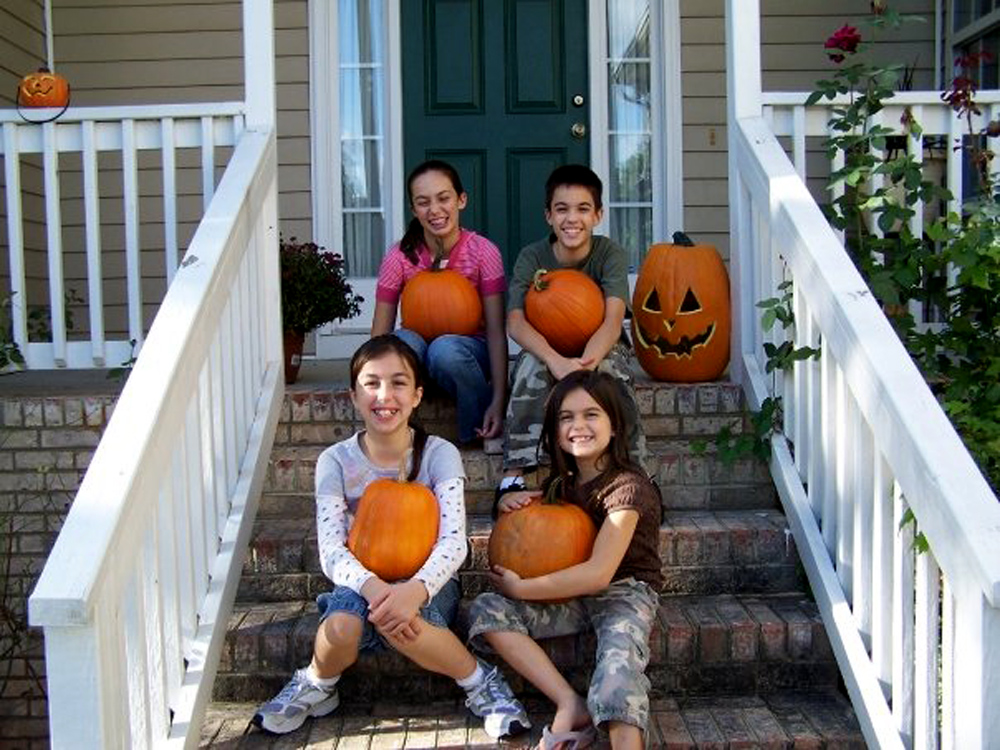
Halloween 2009: Proudly displaying our pumpkins before carving them with this year’s design.

Celebrating the American way: Candy, Parties, & Trick-or-Treating

For me, Halloween encompasses so much more than just one day. It’s a month long celebration, marked by many annual traditions. In my family, nights in October are usually filled with all kinds of fall festivities and Halloween preparations. These typically include carving pumpkins, watching movies, and baking Halloween cookies for our friends, family, and neighbors.

Every year, typically during the second week of October, we go to a pumpkin patch, a tradition that has remained one of my favorites since I was young. We excitedly walk through the field of pumpkins, searching for the perfect one for this years carving. Once we find our pumpkins, we grab a hot apple cider, and a spiced cinnamon donut. These are my fall food staples. The pumpkin patch usually offers hayrides, corn mazes, and other fall festivities, and is filled with people of all ages.

With T.V. channels playing popular films of the season, another one of my favorite traditions is hosting a Halloween movie night with my friends and family. While some may opt for scary movies, such as Halloween or The Nightmare on Elm Street, I prefer my childhood classics. The movies I watch every year are Hocus Pocus, Halloweentown, The Nightmare Before Christmas, and Twitches. My siblings and I have watched these for years, and there has yet to be a Halloween where we don’t all watch these classic movies together. The movie night is usually filled with autumnal snacks, like pumpkin seeds, caramel apples, and pumpkin pie. It’s a cozy tradition that I have missed very much during this October in Oulu.

Many people also choose to spend their Halloween in a more spooky fashion. Haunted houses, hayrides, and corn mazes have become increasingly popular, especially among the younger generations. While this may appeal to some, my approach to Halloween is much more relaxing and less scary.


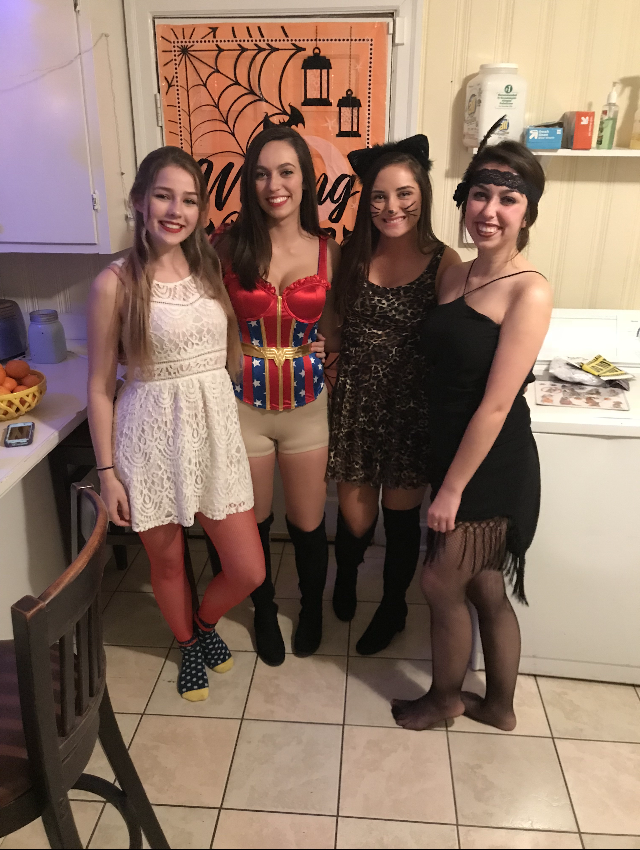
Halloween 2017: Visiting my sister at East Carolina University, a school notorious for it’s crazy Halloween celebrations.


The build up to Halloween is arguably the most fun part of the holiday. Yet, as the sun begins to set on the final day of October, children finish up the final touches on their costumes. Excited mummies, witches, and superheroes leave their homes and head to the nearest porch with the front light on. This symbol means that the family inside welcomes trick-or-treaters, and is prepared to hand out candy, small toys, or other Halloween treats.

For children, the night of Halloween is typically spent trick-or-treating: going door to door collecting treats from the neighboring homes. As you get older, however, Halloween can be spent in a variety of ways. Most young adults and students attend parties, filled with costumes, drinking, and classic autumn party games, such as bobbing for apples. Many people spend their evening at haunted houses or neighborhood gatherings, while others may choose to stay at home and hand out candy to trick-or-treaters.

Although Halloween traditions vary between regions, cultures, and families, those who choose to celebrate the day usually participate in similar festivities. However the night is spent, Halloween is a day filled with fun for all ages.

Historical Roots of Halloween: Celtic Beliefs & European Traditions

Although modern day Halloween is all about family, friends, and fun festivities, the holiday has significant historical roots. The traditions of Halloween originated with the ancient Celtic festival of Samhain. This festival marked the end of the harvest and the start of the cold winter, a time often associated with death, darkness, and despair.

The night before the Celtic new year, the Celts believed that the spirits of the dead returned to earth. These traditions spread around the world, and Halloween in the United States developed as customs from European immigrants combined with Native American beliefs.

The first Halloween celebrations in the U.S. included public parties that celebrated the harvest, where people of the town would share ghost stories, dance, and tell each other’s fortunes. During the nineteenth century, these celebrations became increasingly popular throughout the states. Immigrants from England and Ireland brought with them the classic tradition of dressing in costumes, which gained widespread popularity across the country. They also expanded the tradition which later became known as trick-or-treating, a response to the increasing pranks and mischief that had come to be associated with the night of Halloween.

In theory, giving treats to the neighborhood children was intended to prevent them from playing tricks on the family. This tradition continued to expand, growing into the wildly popular practice that is still around today.

As these traditions continued, Halloween parties became staples in every home and in every classroom. Today, many Americans continue to celebrate the holiday, and traditions have spread across the globe.

Halloween in Finland: Increasing in Popularity

Before arriving to Finland, I had never really questioned my belief that everyone around the world surely celebrated Halloween. I was shocked to discover that it just didn’t seem to be that popular here. While some supermarkets offer Halloween candy, decorations, and costume props, the traditions I am accustomed to seemed to not exist.

However, upon further investigation, I’ve realized that the traditions of Halloween are becoming increasingly popular in many European countries, including Finland. Many schools throw Halloween celebrations or autumn festivals, and jack-o-lanterns can often be seen in the yards of Finnish homes. The more I look, the more I see Halloween-related items in stores, however, they’re typically very expensive, and the selection is usually limited. A mask is nearly 8 euros, whereas in America, you could buy the same thing for 2. Many supermarkets in the U.S. also have entire sections dedicated to Halloween and Fall decorations, which may take up to 1/4th of the total size of the store.

“Before arriving to Finland, I had never really questioned my belief that everyone around the world surely celebrated Halloween.”

I’ve been told that some Finnish children even go trick-or-treating, and the numbers are continuing to grow. There are many costume parties and events at pubs, with a seemingly large number of people in attendance.

Overall, Halloween seems to be gaining popularity in Finland, and I look forward to experiencing the holiday as the country continues to develop unique traditions of their own.

Kekri & All Saint’s Day: Cousins of Halloween?

While Halloween festivities may vary, I was surprised to find out that there are two somewhat similar celebrations that take place in Finland every autumn.

The first is Kekri, a celebration that historically marked the change of the year and the end of the harvest. Although there is no set date, festivities for this holiday usually take place over the course of a few days, sometime between the end of September and beginning of November. It is a Finnish tradition that has been celebrated since Medieval Times, before Christianity came to the country. Historically, this holiday has included the performance of plays, singing, dancing, drinking, and a festive food. Some people also carve turnips or pumpkins, an activity known as kitupiikki.

Another day similar to Halloween is All Saints’ Day, or Pyhäinpäivä. This is typically celebrated on the Saturday between October 31st and November 6th, and is a commemoration of lost loved ones. Public offices close, and churches usually hold a special All Saints’ Day Mass. Many people can be seen walking through the cemetery, and placing lit candles on the graves of family or friends. Many people throughout Europe participate in the traditions of this day, which on Finland and Sweden falls on November 3rd this year.

What Halloween means to me: Celebrating in Oulu

While there are many Halloween-themed things, parties, and events in Oulu, this years celebration just won’t be the same. There are many things that I miss from home that really make this time of year special. Not having my family and friends with me to watch Halloween movies, carve pumpkins, and cook festive food has been really difficult, but there are ways to create a true Halloween feeling while abroad.

My tips for an authentic Halloween include a movie night with friends, where you carve pumpkins, make caramel apples, and of course, eat lots of candy.

“While there are many Halloween-themed things, parties, and events in Oulu, this years celebration just won’t be the same.”

One of the most classic Halloween candies is Candy Corn; basically a triangle of sugar, but it can be found in almost every American home during the month of October. Besides candy corn, classic foods of this holiday include pumpkin seeds, pumpkin pie, and both candy and caramel apples. I may be biased, but this time of year offers some of the best foods and drinks. Apple cider and the infamous pumpkin spice latte are fan favorite drinks, and flavors such as pumpkin, apple, and cinnamon are very popular.

For me, however, the most important parts of Halloween are the ones spent with loved ones. I typically live without the trick-or-treating, although, if people would still give me candy, I would definitely dress up and go door to door.

While this year’s festivities may be a little different than what I’m used to, I look forward to experiencing the way that the Finns, and other international students, celebrate this holiday.


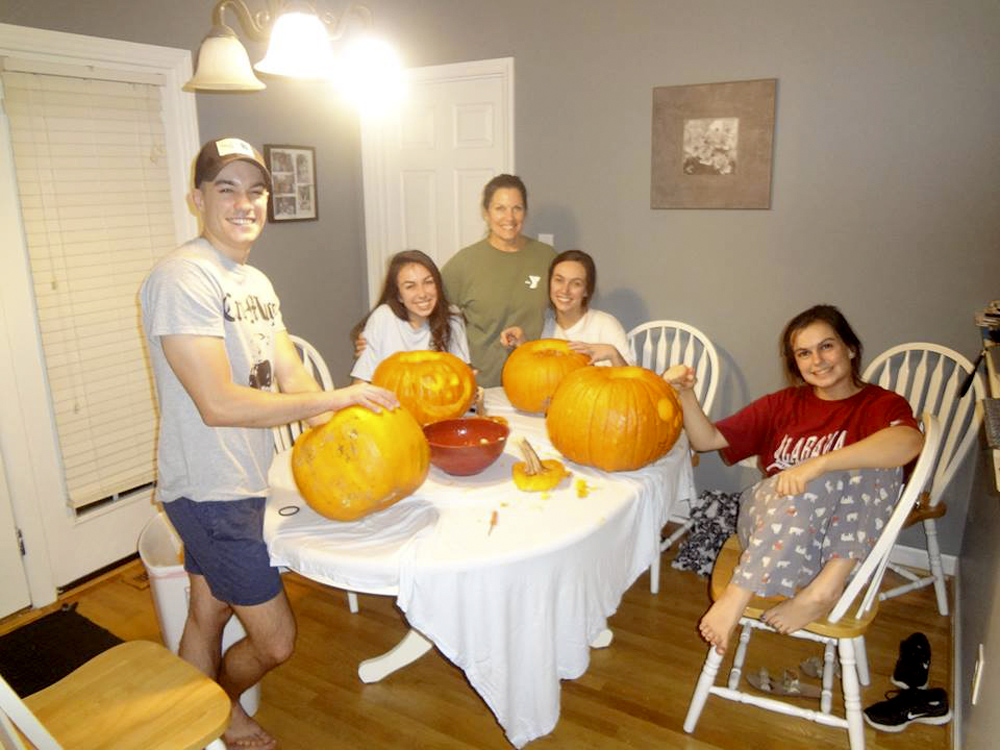
Halloween 2017: Our annual family tradition is still going strong. Last year carving pumpkins with my mom and siblings.

Morgan Neering

An American exchange student trying to navigate a world in which buses are silent and where McDonald's offers a vegan burger. A firm believer in the idea that "we cannot become what we want by remaining what we are."

Lue lisää: