
“The teacher identity developed beside the researcher identity” — The Coolest Teacher Ever 2022 Jukka-Pekka Ranta highlights the importance of motivation

A lecturer of mineralogy and geology, Jukka-Pekka Ranta, was chosen to be The Coolest Teacher Ever of 2022 by the Student Union of University of Oulu (OYY). Ranta focuses on the role of motivation and interesting education methods in his teaching. Jukka-Pekka Ranta’s badminton games for the evening almost went off the rails when he heard […]

A lecturer of mineralogy and geology, Jukka-Pekka Ranta, was chosen to be The Coolest Teacher Ever of 2022 by the Student Union of University of Oulu (OYY). Ranta focuses on the role of motivation and interesting education methods in his teaching.

Jukka-Pekka Ranta’s badminton games for the evening almost went off the rails when he heard of being chosen as The Coolest Teacher Ever. He was primarily grateful for students’ support which he also has earned previously via geosciences’ student organization as well as the An Apple for a Teacher -event.

“Geology is, all things considered, quite a small field of study in the university, but it is great that students are active on that level”, Ranta thanks.

Ranta’s career to become a researcher and a university lecturer was still hazy before he started his studies. First working as a bartender, he intended to study psychology but ended up studying geology in the end. Ranta started his studies in 2008 and graduated with a Master’s degree in geosciences in 2012.

“Since the first lecture, I realized that this was for me”, Ranta reflects.

After his university studies, Ranta worked in Lapland roughly for a year in ore excavation. Afterwards, he started his work on a doctoral thesis in 2014. Since that point, teaching has been a part of his career. The doctoral thesis was finished in 2018 after which various postdoctoral research work led him to become a university lecturer in 2021.

Even when working on the doctoral thesis, Ranta did not think of himself as a teacher. The teacher identity developed stronger only during the past few years on the university’s pedagogical studies. Ranta thinks that people come to work at the university primarily as a researcher.

“The development of the teacher identity in the university is a bit different compared to basic studies since most people do not work here primarily as a teacher. Teaching is the small print in the job agreement.”

Practicality and students’ responsibility are vital

In teaching, Ranta highlights practicality and student’s own responsibility in how effectively a student learns something.

“New tools and more student-centered teaching and learning have just during the last few years emerged stronger.”

“Teaching is the small print in the job agreement.”

New teaching methods have helped Ranta to become more practical. For instance, digital workspaces, gamification and inspecting rocks via 3D models have provided new perspectives on standard lectures and study diaries. However, their use has to be relevant for learning.

“One must pay attention to not use them just for the sake of their tools. There must be a purpose for using a specific one.”

In his courses, Ranta emphasizes his background as a researcher and teacher as an influence on what courses he has enough substance knowledge to organize. While pondering their structure, Ranta especially wonders about the responsibility of the teacher.

“During the courses, I started to think about the responsibility that we teachers have. We train such people that have sufficient skills and expertise in work life.”

Nevertheless, the student’s own responsibility is an especially important aspect that the teacher can influence only by so much. Therefore, Ranta thinks it’s important to get the student excited early about their studies so that their hunger for knowledge stays in Master’s studies and long after that.

“I hope my own inner motivation and excitement also reaches the students. It is especially important to get the basic course students new to geology interested in it.”

Approachability and understandability benefit

The voters described Ranta as an easy person to approach and understand and for having great expertise. Ranta recalls his own studies when he felt tense to approach a professor’s or a teacher’s office.

Ranta thinks that his flexibility in courses is a reason for being seen as easy to understand. For example, he may spend some time revising basics if the students have forgotten something essential. Additionally, listening to the students and utilizing various education styles play an important part.

In addition to other researchers, Ranta has also embraced several traits from his own teachers and tutors in his teaching. Each of them have left their mark on Ranta.

“In my courses, I often exhibit similar traits, expressions or maneuvers from my old teachers which is amusing to notice.”

Regarding his expertise, Ranta deliberates whether he can evaluate it alone on a larger scale. He thinks that people in professional work often encounter an impostor syndrome: the difficulty to realize one’s own achievements to be fully earned. Despite this, Ranta’s motivation and passion differentiate him with his studying methods to be a unique teacher.

“The courses where one sees a lightbulb lit above the students’ heads are the best.”

Students’ realization rewards the most

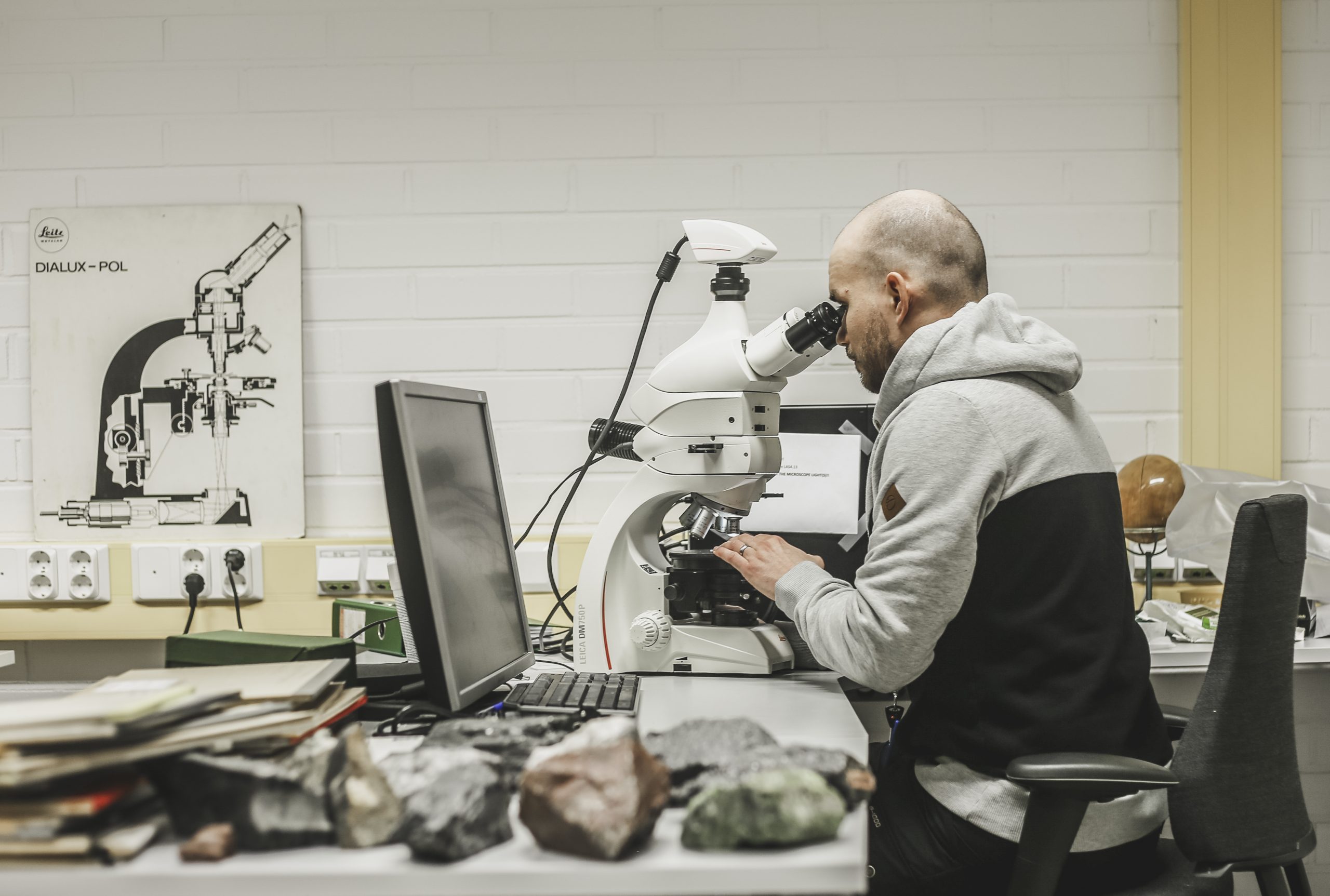
The courses that combine practicality and theory are Ranta’s favourites. He mentions an example, Petrology, in which students explore the characteristics of stones and their formation processes on a macro- and microlevel. In these types of courses, Ranta finds the students’ realization of the discussed topic to provide the best feeling.

“The courses where one sees a lightbulb lit above the students’ heads are the best.”

Ranta faces many kinds of students in his courses. Some students are more motivated than others. Even in difficult cases, he strives to motivate the students’ course work via his own excitement. An important point is to find the core idea and to reflect the course work on geology and as training for the real world.

In the future, Ranta wants to continue his current work in the academic world as a researcher and a teacher as well as to develop his own substance knowledge in mineralogy and ore geology.

“Regarding the education and the development of geosciences, there is still a lot to be done.”

Who?

  • Jukka-Pekka Ranta
  • University lecturer since 2021
  • Responsible for Oulu Mining School’s degree programme 2019-2022
  • Doctor of Philosophy 2018

What?

  • The Coolest Teacher Ever 2022 was awarded in Annos 63 annual celebration 25.2.2023
  • Any student at the University of Oulu was able to suggest any university teacher in any educational field to receive the award for The Coolest Teacher Ever.
  • Selection criteria included the ability to inspire, professionality, being easy to understand, explanation of course goals, paying attention to students’ needs, flexibility and a versatile use of grading methods
  • The award was given for the seventh time. Previously the award was given to Elina Niemitalo-Haapola, Katja Sutela, Vesa-Matti Pohjanen, Oliver Jarde, Matti Niemelä and Matti Kangaspuoskari
  • The decision was done by the board of the Student Union of University of Oulu on 26.1.2023
Jere Laitinen

Oulun ylioppilaslehden toimitusharjoittelija. Opiskelutaustaltaan kokenut ainejärjestöaktiivi ja opiskelijavaikuttaja sekä innokas pelaaja ja kokkailija. 

Lue lisää:

Life in 18 Square Meters: A Uni Student’s Experience with ADHD During Distance Learning

When we think about educational accessibility, we often consider our own experiences of whether or not we feel fully included in educational activities. The realities of distance learning have made the burden of coping with daily life difficult for university students, but even more so for many with special educational needs.

Otso started his studies in Autumn 2020. He had realistic expectations from the beginning. 

“I knew university studying would be hard. High school was hard, middle school was hard, and I assumed it would only get harder.” 

He made a plan to take it easy for his own sake; pacing himself with his studies, especially now during the pandemic. Otso recognized that it would be challenging. Still, he didn’t anticipate the amount of difficulties he would experience with remote teaching in reality. The lack of routine, fewer lectures, more assignments, next to no face-to-face teaching, no clear schedules, and broken sleep patterns are some of the main struggles of distance learning life for him.

The amount of distractions at home has been the most frustrating part of distance learning for Otso. He describes seeing the sun rise and set from his window. He watches the people drive by in their cars, going somewhere else. 

“With face-to-face learning, there are fewer things to take my attention and distract me.” 

Studying from home without a real-life social context – one person,  a screen, and distractions – makes distance learning particularly challenging. Otso points out that ADHD makes it difficult to read and focus. He thinks this gets overlooked and is often “seen as just a wild little boy’s problem, which it is not.”  

Positive Social Pressure

For Otso, working together with others makes a great deal of difference. “Working in a group gives me a sense of urgency and motivation and mutual accountability – positive social pressure.” He feels that Zoom breakout rooms are something, but the social connection that creates the ‘right sense of pressure’ is just not there. “I remember at the beginning of term when it was easier to meet up with classmates and we’d get together with a few people. I was proud of myself for how much I got done then”, he reflects. 

In addition to doing coursework together, the emotional and social support from classmates is significant: “Our class  has been really great about that. There have been lots of crying emojis on our class Whatsapp group and probably real crying behind them.”

He values the great job his classmates have done in being there for each other and being non-judgemental even in hard times.

So far, Otso has also had positive experiences with university teachers being responsive and flexible during distance learning. However, he proposes that teachers could reduce the workload and offer tasks on a schedule that are less open-ended. 

“Distance learning gives more flexibility, but for me that is a big no.” 

A routine helps Otso remember to take care of himself and manage time effectively. “It really helps keep me focused when there is a specific time to do things: eat, work, move.”

He remembers a seminar at the beginning of the term handling life skills, goal setting, and motivation. Otso thinks that being coached on the importance of these things is not enough if you don’t have a routine to keep the motivation going. In particular, for students beginning their studies and for students with special education needs this is a vital tool that can make all the difference in learning.

“Having a routine in general helps with #adulting too,” he jokes.

Is the University doing enough?

Otso feels that the university has offered some help when he sought it out. He was referred to a psychologist and offered some adaptive learning support.

“I got a paper saying that I had the right to turn in assignments later and was allowed some flexibility by adapted assignment return dates.” 

Still, he doesn’t want to speak for everyone.

“To be honest, I don’t know enough to say whether the university has done its best for special education needs learners in general”. He states that, “being a self- advocate was important in making sure I got help and took it.” There may be students who suffer and do not have the tools or knowledge that they need to be proactive and get help.

Despite Otso having a positive experience in getting support, he describes having feelings of being wrong or weird when struggling with distance learning.  He started his studies this academic year and the combination of being new to the university and not meeting expectations has been a heavy burden to carry. 

“My self-esteem has definitely been affected. I’ve been dealing with depression again because of it. Generally, the distance learning situation has affected my overall physical and mental health.”

Due to the difficulties, Otso is taking the spring semester off and delaying studying until autumn. During his leave he has continued developing his teaching experience by substituting when possible.

Looking forward towards the autumn term he has feelings of optimism and realism. “I hope that everything goes back to normal, but in reality I am feeling that it will be hybrid at best.” 

As the interview comes to an end in Tellus glass box number 4, he says something many remote studiers can relate to. “Thanks for giving me a reason to leave my flat… All of 18 meters squared.”

BURNING QUESTIONS

The student-led education event, Burning Questions 2021, featured a workshop on Special Educational Needs provision during distance learning. Participants offered their recommendations for better practice from the student and teacher perspectives.

The number one recommendation from the student perspective was simply: Ask students what works best for them. 

Continuing the dialogue between students, university teachers, and administration about what works and what doesn’t work will help make distance learning more accessible to all. 

Self-advocacy skills were seen by many participants as vital – even more so during distance learning – and they should be taught. 

Minimizing the cognitive burden of distance learning can be done by aiming to make it as close as possible to face-to-face learning. 

Empathy, differentiation, and more training are some suggestions participants made for teachers/lecturers. 

Time before and after online lecturers for informal discussions can contribute to student well-being and motivation. 

Finally, peer support groups and guidance for making an effective daily routine can make learning more accessible for special education needs learners as well as for all students.

Anna Heumann-Kaya

Intercultural teacher education student. Amateur Yogi and professional Humanist. Believes written word is the spice of life. Twitter: @AnnaHeumannKaya

Lue lisää:

Studying to go back to normal in autumn – Rector Jouko Niinimäki says teachers will decide

It’s not yet been decided whether studies this autumn will go back to normal or stay remote, says Jouko Niinimäki, the rector of the University of Oulu. The goal, however, is to return to normal.  “We hope and believe that we can get back to normal by autumn. At the moment, we believe that the […]

TEKSTI Iida Putkonen

KUVAT Iida Putkonen

It’s not yet been decided whether studies this autumn will go back to normal or stay remote, says Jouko Niinimäki, the rector of the University of Oulu. The goal, however, is to return to normal. 

“We hope and believe that we can get back to normal by autumn. At the moment, we believe that the corona situation will in any case calm down for summer. It’s safe to assume that all adults will have at least one dose of the vaccine by August.”

Niinimäki says that national or regional exit-plans may restrict the university’s hopes, as they will decide in which order services will return back to normal. The university has announced earlier that it’s preparing to organise courses as contact-teaching from the 1st of August onwards.

According to the rector, the university hasn’t made any exact plans about transferring to contact-teaching nor planned separate guides for teachers.

“No instructions for autumn have been planned, and there won’t be any guides from the university management. Instead, they’ll be decisions made by teachers and students on the field”, Niinimäki comments.

When last autumn contact-teaching was mainly secured for freshmen, this time around the goal is to offer contact-teaching for everyone. The hope is that everyone could start normally, Niinimäki says. However, it’s not purely a return to the old normal.

“During the pandemic, we’ve learned some things both in work and study life that we want to keep. I believe that neither students nor teachers want to return to quite the same daily routine as before the pandemic, but instead some remote work will become permanent.”

According to Niinimäki, remote studies have brought people more freedom and decision-making power about their own schedules. However, it’s not the purpose to get stuck with remote work forever.

“Contact-teaching is extremely important, and the university will continue to keep offering contact-teaching as much as possible. It’s well known even through research that time spent together with the teacher improves learning.”

However, mass lectures for hundreds of students might benefit from being remote in the future as well, the rector thinks. If the teaching is one-sided, there’s not that much of a difference whether teaching happens in the same physical location.

Entrance exams to test things out 

For this spring, teaching will continue remotely, but contact-teaching will be tested with the spring’s entrance examinations. Last spring universities arranged entrance examinations through alternative methods, such as digital exams and acceptance based on grades. The changes of the criteria received critiquing, which Niinimäki agrees with.  

“The critiquing was justifiable, and I agree with it. Because of it, universities have now decided to arrange entrance examinations in person. When you look at the national corona situation, I’m confident that it’s going to be fine.”

Niinimäki emphasises the increased safety measures of the exams and the fact that there’s enough space for each candidate on campus. However, there’s still a problem with examinations being arranged in person: if a candidate is in quarantine, they can’t participate in the exams this year at all. The common guide for universities states that a candidate who’s otherwise ill, in a voluntary quarantine or waiting for test results must also not participate in the exam.

“Due to getting ill, there might be individual injustices. They’re sad things and personal tragedies, but as for corona, you can say that if someone wants to protect themselves from an infection before the exam, all needed means are available.”

This year 20 133 people applied for the University of Oulu, which is over 3000 more applicants than last year. Despite the large number of candidates, rector Niinimäki is positive that the University will get through the examinations safely.

“I hope that people coming to the examinations live so they won’t get an infection before the examination. I trust that things will go well in Oulu, and that an easier time will dawn by autumn.”

In practice an easier time in autumn would mean contact learning for both new and old students and a return to the old normal in August.

Iida Putkonen

Oulun ylioppilaslehden entinen päätoimittaja. Tiedeviestinnän maisteri ja glögin ympärivuotinen kuluttaja. Etsii revontulia, riippumattoja ja juuri oikeita sanoja.

Lue lisää:

The second teaching period will also be held remotely – the concern is student wellbeing

On the 16th of September the University of Oulu announced that teaching will be held mostly remotely during the second teaching period as well. Remote teaching continues both at the University and the Oulu University of Applied Sciences until the end of the year.

TEKSTI Iida Putkonen

KUVAT Anna-Sofia Tastula

Read this article in Finnish.

The University of Oulu announced that teaching would be arranged primarily remotely also during the second teaching period from 26 October to 31 December 2020. Remote teaching began in September and will continue until the end of the year. Students were notified via email on the 16th of September.

The decision to switch to remote studying was originally made regarding the first teaching period until the 25th of October. Oulu University of Applied Sciences (Oamk) announced they would continue remote teaching until the end of the year on the 9th of September. Teaching will only occur in person if absolutely necessary.

During the second teaching period the University’s policies will stay the same as the beginning of autumn. Teaching will be done remotely, with the exception of courses where being present in person is necessary. Such courses are for example those with teaching in laboratories. When teaching in person, the University recommends participants use masks. The University is also giving out masks to teachers and students who need them during lessons.

Oulu University’s Administrative Director Essi Kiuru says the decision was influenced by both wishes from faculty and students as well as national guidelines.

“Students and staff alike hoped we would reach a decision regarding the second teaching period as soon as possible. The same policies we currently follow will continue to be in effect”, Kiuru says.

For students this means that the campus doors will stay open during certain times and services like the library and laptop vendors will continue to be available for use.

Also influencing the decision were decisions made by other universities, but Kiuru says that safety is still the most important thing. Even then, she hopes to be back in normal conditions soon.

“Our greatest wish is that in spring the situation would be that we could open up the University like we normally would. Unfortunately the situation is not in any of our hands”, she says.

As remote teaching continues, concerns have been raised regarding the wellbeing of students and staff. To Essi Kiuru this topic is especially important.

“It concerns both our personnel and students. Anyone in our community can feel lonely or like they have no group around them. It is everyone’s responsibility to take care of each other.”

Kiuru says all available tools should be used to ensure no one is alone during these exceptional times. For example group assignments and recurring meetings are ways that could help.

Taking care of students and the quality of teaching

With remote teaching continuing the importance of the quality of teaching is bigger and bigger. The University’s Director of Academic Affairs Vesa-Matti Sarenius told us that they aim to improve quality continuously.

“We are continuing to educate our teachers in these matters. There are also guides being made nationally as we speak.”

According to Sarenius the transition to remote teaching was a surprise to many teachers and has brought challenges with it. As the situation continues in autumn the problems are being solved one by one.

“Right now universities have noticed that the problems must be dealt with. We aim to influence the quality of teaching via educating and informing”, Sarenius says.

The Academic Affairs team sees how the abnormal circumstances also affect students. Many are strained. Sarenius says that teachers are told to pay close attention to their students and how they progress.

“If it looks like a student is stuck, we aim to intervene sooner than before. The problem of course is that when you don’t have a group to teach, you can’t look at someone’s face and see that they aren’t okay”, Sarenius says.

As the Director of Academic Affairs Sarenius pays close attention to his own employees and their wellbeing. To him it is especially important to separate work and free time, especially during remote work.

“I try to tell everyone, also students, to pay attention to the relationship between work and studies and free time. Don’t just sit at your computer after your lectures. Take a genuine lunch break away from your laptop. These small things make up a difference between work and free time.”

When thinking about communality and the risk of alienation, Sarenius agrees with Kiuru. He hopes for togetherness and good group dynamics.

“Corona doesn’t stop social situations. Our teachers are told to invest in group dynamics also during remote teaching. Of course the University can only control what happens during studies. I recommend socializing with other students during your free time and seeing your friends, taking into account hygiene and social distance.”

Sarenius hopes that students would also use the offered support systems with a lower threshold. He sees that it requires students taking responsibility for themselves.

“The services for students are the same as before, they’re just organized remotely. I would hope students would be brave to use the available services and all the support systems available.”

Exchange is still on the table, though few apply

The University of Oulu also announced that even though remote teaching is continuing, student exchanges for spring 2021 are unaffected. Still, the safety measures have been tightened: arriving students are expected to have a corona test or quarantine and the leaving students will be recommended certain countries and a good insurance.

Corona has affected exchange students arriving to Oulu this autumn. The amount of exchange arrivals has been half of the normal amount and many exchange periods have been cancelled or rescheduled.

International Coordinator Marianne Isola says she is happy with the University’s policy. Even though the number of students going on exchanges is significantly lower than normal, cancelling future exchanges would have undercut a lot of work.

“We have been preparing the spring exchanges for a long time and I am happy we can keep preparing them. We will, however, keep safety as the most important guideline”, Isola comments.

Even though exchanges got a green light from the University, many of them have already been cancelled. According to Isola, many affiliate universities have already cancelled exchanges completely, both for outgoing and incoming students. Exchanges have also been moved from autumn to spring, but the biggest change to Isola is the lack of applicants altogether.

“There were less applications for exchanges than normally. On top of that there were more cancellations or reschedulings. The end result is that about half of both University of Oulu and Oamk exchange students are coming here and leaving.”

The future of student exchanges is facing a big change, Isola thinks. In the future exchanges could be held entirely remotely or only partly in the destination. Regarding the near future Isola only hopes that the situation won’t get any worse.

“It’s hard to believe we would be back to a normal level in students going on exchange. I would be happy if we had the same numbers as now during spring, so half of the normal amount”, Isola says.

Student restaurants aim to stay open

Remote teaching at University and Oamk is also affecting services on campuses. The CEO of Uniresta, provider of student priced lunches on both Oulu campuses, Kaija-Liisa Silvennoinen told us that the news came as a surprise.

“We had not received this information before. Now we will have to think about Uniresta’s situation in all this.”

The aim will be to keep the currently open restaurants Kastari, Medisiina and Preludi going.

“We want to keep our services open for as long and as well as we possibly can in this situation. Of course this remote teaching will affect our amount of customers, but even in this first half of autumn we have been able to keep our restaurants open.”

Helping keep the restaurants open have been reduced opening hours. Uniresta’s Campus Shop and H2O campus have also been closed during autumn. Silvennoinen says that Uniresta was planning on opening the Campus Shop and H2O after autumn break, but the University’s decision might just cause a change in plans.

“We will have to further think about whether opening in this situation makes sense and is profitable. It is of course an understandable decision, but in terms of business it’s rather unfortunate. I’m sure it will reflect in the amount of customers”, the CEO says.

There will be no further reduction to the currently open restaurants services. The planned expansions, however, are uncertain. For example Linnanmaa’s student restaurant Kastari’s opening hours were already supposed to broaden in September. Now the evening dining will have to be reconsidered.

“I would dare promise that we will not close any more restaurants and will keep the current ones open. We will try tooth and nail to keep lunch available both in Linnanmaa and Kontinkangas. We can still adjust our operation to the current circumstances. For example Kastari is already being run by a smaller staff than normally.”

Despite the circumstances, Kaija-Liisa Silvennoinen is grateful for students and customers.

“We have come nowhere near normal numbers during autumn, but the fact that customers have had the courage to dine in our restaurants is amazing. In relation to the circumstances we have been happy with the beginning of September. It is wonderful that even a part of our customers have lunch in Pekuri in the city centre or Kontinkangas or Linnanmaa. It is lovely”, Silvennoinen says.

The other business offering campus restaurants, Juvenes, also says they were not in the know of the decision to lengthen remote teaching until the end of the year. Juvenes restaurant and event manager Minna Gehör told us that the decisions regarding restaurants are made one week at a time.

“I haven’t had time to digest this information yet. We will go with what the utilization rate of our restaurants is.”

Currently Juvenes has two restaurants open, Foodoo and Foobar in the Linnanmaa campus as well as a cafe, Café & Juicebar. Gehör says these services have been enough in relation to customers during the beginning of autumn.

“Two restaurants and a cafe have been enough. Our customer numbers have been very small compared to previous years and autumn has been exceptional.”

In regards to the future, Gehör can’t say how it will be.

“We will have to see if the continuation of remote teaching will affect the current amount of diners. It is possible we will have to close our restaurants if the amount of customers drops radically.

Campus services are still available

After the campus shutdown caused by coronavirus, the University of Oulu opened its campused in August. Even though remote teaching will continue, the doors will stay open. Campuses can be accessed by anyone between 8 am and 15.45 pm during weekdays. Studying on campuses is allowed as long as you show no symptoms of a flu. Libraries and laptop vendors as well as Tellus are available for use. When campus doors are closed, the campuses can be accessed via 24/7-card.

Oamk announced they would move to remote teaching for all students, freshmen included, on the 21st of September. The Oamk campuses are still open for independent studying.

The electronic Exam will continue to be the main tool for assessing learning during the first period, but other alternative methods for completing courses can also be implemented, such as essays, home exams, or learning diaries. Traditional exams at campus are not recommended to be held on the general exam days but organised by the course teachers individually. However, general exams can still be arranged with the safety distance of 2 metres between the students. The same instructions will be upheld until the end of the year.

For further info regarding being on campus visit the University’s website or the Oamk website.

The University’s list of resources for remote studying

Iida Putkonen

Oulun ylioppilaslehden entinen päätoimittaja. Tiedeviestinnän maisteri ja glögin ympärivuotinen kuluttaja. Etsii revontulia, riippumattoja ja juuri oikeita sanoja.

Lue lisää:

Tools and tips for the academic year that I wish I knew as a freshman

Studying is hard work, but the right equipment will make it a lot easier. In this article, Anca M. Catana shares her experiences and gives tips for successful student life.

There are things that will make studying a lot easier. Some of them might be obvious, but others not so much. Here is a list of things to consider, heading into the new academic year as a student. 

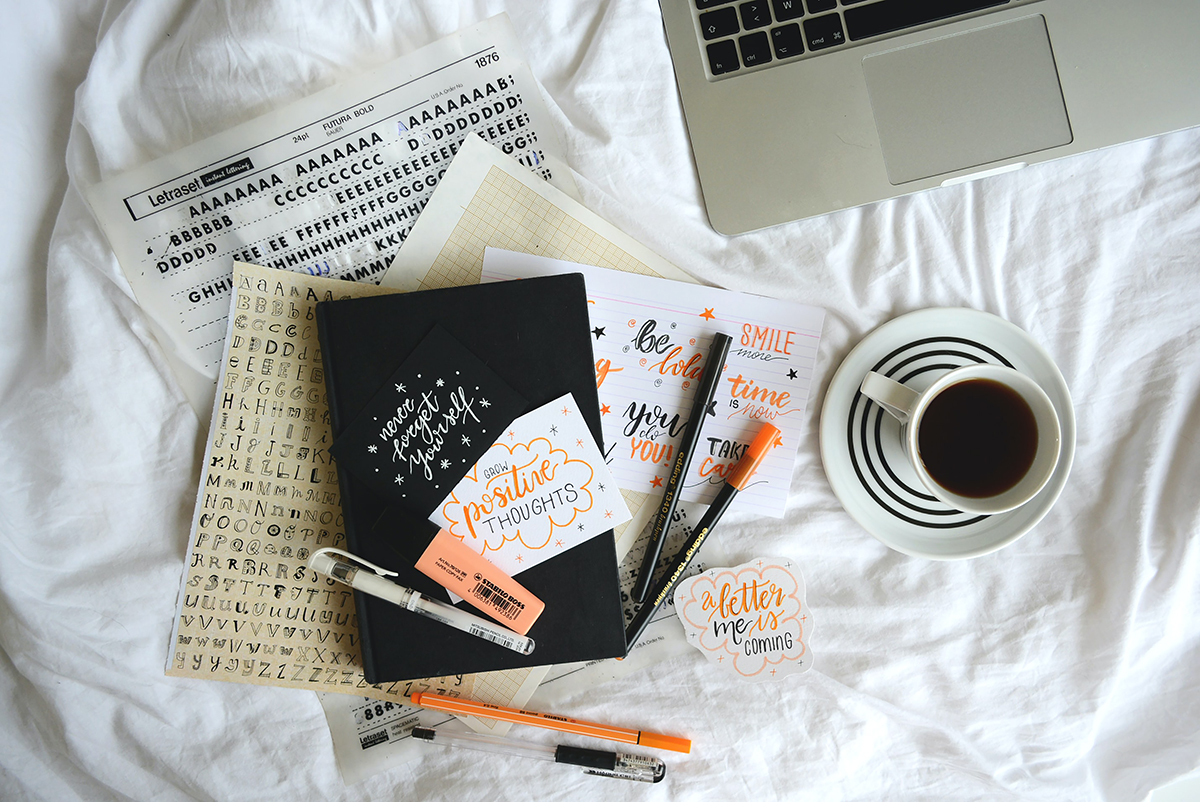
A planner

Coming straight from being a high school student, or from a job with a regular schedule, or from a parental leave with a very irregular schedule, the need for a planner might not be so obvious to you at this point. But once the courses get rescheduled, the assignments pile up and your free time gets crowded, you will definitely feel the immediate necessity of such an item. Luckily, there are several options regarding planners and I have tried them all. 

Online calendars. They are ok, but not great. I’ve been using online calendars as a back-up/complementary calendar to my paper planners, but never exclusively. The biggest advantage is that it’s always there, so you can easily book a date. The downside is I feel it easily gets more crowded than it actually is, and you might just “lose the track of time” if you ran out of battery.

Standard planners from supermarkets or book stores are for you if you just want to keep up with your lectures, assignments and student events, but are not the most hyper-busy type of student. Inexpensive (compared to other paper counterparts), ready to fill-in, with tons of design options to choose from, you just couldn’t ask more from a basic planner.

A personalized planner made-to-order. This is the option I chose for the upcoming year. If you can’t find your soulmate amongst the tons of ready-made planners, you can definitely create one fit for your taste and needs. The biggest downside: it is much more expensive than the standard one. Of course the production and shipment also take extra time. But if this doesn’t stop you from ordering one, you can finally become the organizing freak you were always meant to be!

Bullet journals. Some fall utterly in love with them. I love the time and money I save by not using one as my planner. If you have the time and inspiration to fill in a layout every single month/week/day and the money to spend on all the fancy accessories, go for it! After having a horrible time with a bujo last spring, I decided to opt out from using it as a planner this year, but I still bought a basic one (and the most basic accessories) for, well.. journaling. So I can keep all my 100 year-plans and 1,000,000 euro-worth ideas neatly in one place.

Writing tools

It’s a no-brainer. You’ve been buying writing tools since pre-school. But if you are one of those who fancy using a fountain pen, you might reconsider your choice, since the ink is very difficult to come across in the Finnish bookstores. 

Pencil and eraser. They never fail. I’ve seen people going through their uni years with only just that. So if minimalism is your way, just get your pencil and eraser (borrow the sharpener from your classmates when needed).

Erasable pens. If there’s something that I totally loved from my bujo adventure, that’s the erasable pens. When I first discovered them, I had a Eureka moment. How did I manage to survive some 15 years of education without ever using one is a mystery for me. But now, I can’t go anywhere without them. You need them in your life, too!

A laptop

This is another one worthy of “duh”. The point I wanted to make is that, when choosing your laptop, especially as a freshman, it is not a good time to get stingy. Do yourself a favor and go for a proper one. You will need it like air, because you need a tool that can keep up with you as well as your Zoom lectures.

A bag that fits your new laptop, if you are a minimalist. If not, you probably need a bag that is sporty, a bag that is more fancy, a bag that can resist a winter storm… and the list can go on and on. But really, you need some reliable ways of carrying your laptop around (or just go for a desktop instead), so the rain, snow and cold of Finnish weather won’t ruin your precious.

Discounts

Get all the discount apps/cards/coupons you can get your hands on (Tuudo app, Pivo app, student sticker). Now life in Oulu ain’t cheap, but over time, with a bit of diligence, you can save a fair amount of money by paying a close eye at all the offers available. There are student discounts for meals in university’s restaurants, bus card discounts, drinks, pizzas, movies, hairdresser, you name it, so you can spend the money on things that really matter (that laptop, I’m telling you).

A thermos

A reusable cup and/or a thermos and a water bottle. The winters are dark and cold, and coffee is your best ally ( we welcome tea-drinkers in our club as well). Do yourself (and the world around you) a favor and buy a reusable cup for when you need to run with your coffee from one place to another. A thermos will save you some nice money in the long run if you choose to bring your coffee from home. (It might not work that well if you like your coffee milk. As I learned, it starts tasting funny after using it for a few weeks). 

If you are going to follow your studies exclusively from home, nothing compares to a sip of hot coffee (yes, or tea) enjoyed outside by the fire on a freezing day!

A plan

While a planner will help you deal with day-by-day stuff, it is important that while in the midst of stress and rush, or the enthusiasm of a new academic year, you don’t let the big picture get completely out of sight. 

The beginning of a new academic year is a good moment to draw the big lines regarding the following semester and year. Think about your academic objectives and work life related objectives. 

If I learned something after four years of studies, is that you simply don’t have time to do everything you would like to do. You can’t take all the courses with catchy names, visit every event and fare, be involved in all the societies and organizations, while keeping healthy relationships and having a balanced lifestyle which includes lots of rest.

As an example, during my first semester as a freshman, I focused on the compulsory studies, and on the second one, I focused on studying Finnish. During my second year I decided to focus on my personal life and family, while during my third year I focused on catching up with all the school work. Last year it was all about gathering different experiences and networking.

Bonus tips

While this is not directly related to the studies, what I personally think works wonders for your well-being and time management is a fitness tracker. 

For example, if you decide to study using the Pomodoro technique (look it up if you don’t know it), you can set the countdown right from your wrist, so you won’t have to pick up the phone every time (and get tempted to check the notifications). 

A fitness tracker will let you know how little you moved around if you studied remotely, so it will motivate you to go for an evening walk or jog. It will also track your sleep, so when you will feel exhausted, you will know if you just need extra sleep, or it’s another culprit (lack of D vitamin for example). 

Finally, you should be able to set different alarms/notifications on your wrist, For meal times, or breaks or what not. The only one I don’t recommend is the morning alarm, it doesn’t work for me. And I am the one who never snoozes a morning alarm. 

An app and notifications blocker. The smartphone is a great tool for every student and an absolute must. But if you tend to get too distracted by it, particularly during lectures or study times, an app and notifications blocker might save you from lots of headaches and stress, and will make the study time significantly shorter and more efficient.

A multi subject notebook. You can go through your university years without touching a single notebook if you like. But if you are like me and remember stuff better when you write it, or get distracted by the laptop (aye for both!), a multi subject notebook might be great for you. Even if you do take notes during classes, there won’t be that much to write that you can fill-in a whole notebook for each course, and we don’t want to waste no paper, do we? Plus, it will be easier to prepare your bag if you just need to use one notebook everyday, instead of digging amongst ten different ones.

And finally, as your student career progresses I wish you good luck!

Anca M. Catana

Education student, theater enthusiast, nature lover. Curious, spontaneous and ambitious, open for new challenges.

Lue lisää:

5 reasons why remote studying is terrible

Should we continue studying at home even after the coronavirus crisis ends? If we ask Anca M. Catana, the answer is a resolute no.

Lately, I found myself bombarded with messages, stories, advices, and whatnot regarding the extraordinary opportunity of studying online. Don’t get me wrong, I am extremely happy that I have the chance to finish the courses and receive the credits, given the circumstances, and I do think that remote studying and online working are going to be more popular in the future.

But some of the stories I have seen end somewhere between the lines of “I hope this will become normalised” or “I wish this will continue like that after the lockdown”.

Well, I hope not! And this is why…

It hurts!

Remote studying hurts, physically. After little over three weeks of remote studying, my back hurts from the weird positions I put myself into during the day, while being glued to my laptop. My eyes and head are killing me in the evenings, after having various screens on my face for hours and hours.

I can’t focus

I think I always fell in the category of people with normal attention spans. In the lectures, I don’t find it very difficult to keep my attention on the lesson, except if it is a terribly boring lecture.

But at home? I get distracted every 5 minutes!

The sun outside is lovely, let me check my emails, I need a drink, let me check my emails, I need to use the toilet, let me check the private messages, I could use a snack, what’s in the news…
Finally, the lesson has ended. Wait, what was it all about?

It’s invading my space

“My house, my rules”, remember? Well, the only space that used to be mine and over which I had absolute control, and where I felt so comfortable, is now invaded every day by 20+ uninvited guest from yet another online class.

There’s always a security risk

You know Edward Snowden? Of course you do, otherwise why would you cover the camera of your laptop with a band aid? Oh wait, now you actually have to uncover it every time you have online meetings. Gotcha!

Sometimes, technology just lets you down

A seven-year-old laptop, a 10 Mbps connection, a smartphone that needs an update right now, a low battery, an expired license, a Windows update… it will happen. Technology is going to let you down, probably in the middle of the most important exam.

Anca M. Catana

Education student, theater enthusiast, nature lover. Curious, spontaneous and ambitious, open for new challenges.

Lue lisää: