The deranged, the distressed, and the detrimental – The stigma of the severely mentally ill is still strong

Petteri Pietikäinen, who has researched the history of madness for over 20 years, has always been interested in the fate of utopists, anarchists and other outcasts. How has our attitude towards madness changed over time?  “[…] And so the unfortunate sufferer is shackled to a corner or kept in the dark, being fed from a […]

Petteri Pietikäinen, who has researched the history of madness for over 20 years, has always been interested in the fate of utopists, anarchists and other outcasts. How has our attitude towards madness changed over time? 

[…] And so the unfortunate sufferer is shackled to a corner or kept in the dark, being fed from a small hole in the wall. There they shall live in their loneliness day and night, in the most miserable condition, hungry and thirsty, sweating in hot weather and then shivering with cold, in the dirt, among parasites. They shall listen to insults and face contempt.”

“Treating the insane” (fin. Mielenvikaisen hoidosta), Savo newspaper, 7/1889

This was the fate of some mentally ill patients back when institutional care was not yet common in Finland. Usually the mentally ill were sold as paupers or they were moved from home to home as lepers – worst case scenario, the mentally infirm were isolated and cuffed. 

The excerpt is from Professor of History of Sciences and Ideas at the University of Oulu, Petteri Pietikäinen’s work titled Kipeät sielut: hulluuden historia Suomessa (trans. “Unwell souls: history of madness in Finland”). “Unwell souls” sheds light on the history of mental health in Finland from the 1850s to the 1960s. The work is a sequel to Pietikäinen’s earlier book Hulluuden historia (trans. History of madness), published in 2013. 

The semantic shift of hullu: who does it apply to?

In the 1800s, hullu (trans. mad) was still a general term for the mentally ill. 

However, the word hullu has always carried other meanings in the Finnish language. According to Pietikäinen, for example, Juhani Aho’s work contains several mentions of the word in both adjective and noun form (i. e. hullu and hulluus). However, Aho refers to the foolishness and unpredictability of people’s actions, not to mentally ill individuals, for example in the statement “Mad is he, who splurges his money on girls” (from the short story Kello, Ensimmäiset novellit, 1883)

According to the dictionary of the Institute for Languages of Finland, another definition of hullu is “wickedly awesome, funny” in contemporary Finnish. This is the definition that, for example, the title Hullut päivät (trans. “crazy days”) carries, referring to the prices of Stockmann’s 5-day long sale.

As modern psychiatry developed in Central Europe in the 19th century, the term hullu was replaced with different diagnoses. Ever since antiquity, madness had been divided into three varieties: mania, melancholy, and frenzy. As the definition transformed into a medical mental illness during the century, the amount of diagnoses multiplied and new illnesses, such as neurosyphilis, schizophrenia, and bipolar disorder were identified. Nowadays, the terms mental health patient and mentally ill are used (The Finnish Blue Ribbon). 

So, should the word crazy then be used when talking about the mentally ill? Pietikäinen emphasises that it is not appropriate, unless the mental health patient decides to call themselves crazy, as for example, author and theatre director Juha Hurme has done.

“Juha Hurme is civilised for knowing the original definition of the term hullu

From closed psychiatric hospitals to outpatient care with the aid of psychopharmaceutical drugs

As the focal point of psychiatry shifted from Europe to the United States in the 20th century, psychopharmaceutical drugs to treat mental disorders were developed. Especially the introduction of chlorpromazine in the United States in 1955 caused a significant turn in psychiatry. 

Before the invention of psychopharmaceutical drugs in the 1950s, symptoms of mental health disorders, such as suffering from hallucinations and delirium, would be visible in patients as such. Patients could only be offered, for example, sleep-inducing drugs and narcotics such as chloral hydrate (sometimes referred to as knockout drops) and derivatives of opium, which were not very effective. Nowadays the mentally ill receive medication early on in their sickness, thus relieving their symptoms. 

Researchers have estimated the introduction of psychopharmaceutical drugs to have led to the reduction of psychiatric beds. For example in the United States, the number of psychiatric beds has decreased to a tenth in 50 years. Whereas in the 19th century psychiatric institutions were often the final station for the mentally ill, few spend their whole lives in psychiatric hospitals in the 21st century. 

According to Pietikäinen, the prescription of strong medication is justified because it enables shorter treatment periods as opposed to longer treatment, which is more costly to society. However, medications do not cure mental illnesses, and they should only be used short-term alongside therapy and social support. 

“Of course psychopharmaceutical drugs help, and it is good that we have them, but the systems should not be built to rely on them”, Pietikäinen states. 

It’s a social engineering skill: from crazy people to proper citizens

The definition of madness studied by Pietikäinen shall not be limited to people who have got a contemporary psychiatric diagnosis, but shall include all those deviants that society has shut out at some point.

Pietikäinen calls this (mis)treatment of individuals who deviate from the norm social engineering. The concept refers to socio-political planning, which aims to change the behaviour of a certain group of people in a desired way. The focal point of it has gradually shifted from prison management to child protective services, education and health care. The concept gained its prominence through philosopher of science Karl Popper’s work titled The Open Society and its Enemies (1945), and it has mostly been employed in Swedish study of history in the 20th century, especially in discussion about social design and in creating “the people’s home” (swe. folkhemmet); a political concept which played a significant role in the Swedish welfare state in the 20th century. 

Political adaptation should always be investigated in its context. A hundred years ago, Finnish society designers had very different ideas as to what a proper citizen was like than contemporary social engineers do. The idea of moulding citizens to fit societal needs is still prevalent. 

“The expectations of a proper citizen are imposed on students also by pushing you to graduate as soon as possible and enter the working life”, Pietikäinen points out. Utilitarianism is still prevalent: good taxpayers are desired.”. 

According to Pietikäinen, the most important difference between former and present times is that instead of using discipline, the mentally ill aim to be helped using rather gentle means, such as social support and therapy. 

Discussion nowadays is more accepting, but the severely ill remain invisible

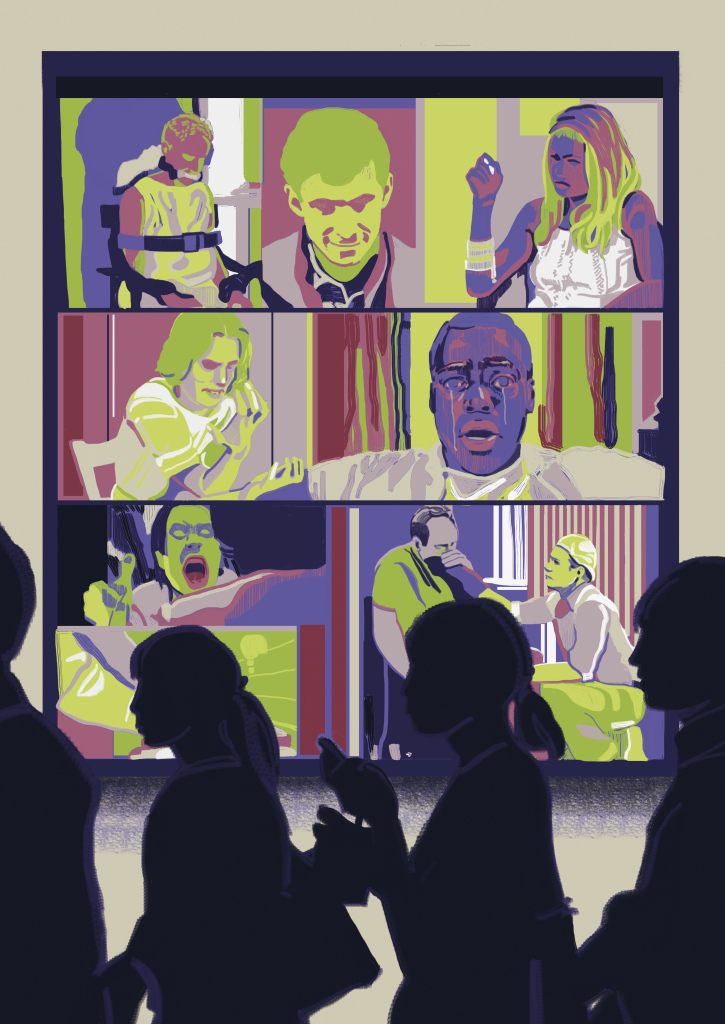
Another clear difference is that mental health issues are nowadays discussed more openly. “If one uses social media at all, they will encounter discussions about mental health.” However, few talk openly about severe mental illnesses, such as schizophrenia. In the media, severe mental health issues are usually only mentioned in contexts of criminal sentences, which further reinforces the stigma. 

“It is different to talk about issues that will pass and ease off than to talk about being in some way chained by that illness forever”, Pietikäinen says. 

Pietikäinen finds one reason for this to be the fact that people have an easier time understanding minor mental illnesses, such as depression and anxiety. Each one of us has some sort of personal experience of these. It is difficult to treat people with severe mental illnesses naturally, not having any understanding of their disorders. 

“I don’t know what it’s like being severely mentally ill, either – it is such a distant concept.”

On the other hand, experiences shared on social media often bring out the heroic and survival stories:  people have recovered from depression or some other mental illness and enthuse over how they survived their illnesses, and what it taught them. The idea of the “proper citizen” is visible even behind this narrative. Can only the already-recovered mental health patients fit into modern society?

Improving the connection between the healthy and the ill – could we learn from the past?

Even before the invention of psychopharmaceutical drugs, we aimed to develop alternative treatments for institutional care – some of which could be used as an inspiration even today. A good example would be the family care, invented in a hospital in the village of Nikkilä, Sipoo in the early 20th century, which gained popularity especially in the time between the wars. Nowadays, the term family care refers to children in foster care being placed in a new family. 

In family care,  a patient would live in a farmhouse near the hospital and participate in the housework. The patient would be a part of the family’s everyday life just like the other family members, but the family would receive a subsidy from the government. 

Although family care never became widespread in all of Finland, it has been proven to have had a positive impact on relieving prejudices. According to research, it seems as though people had a more open attitude toward mental health patients in municipalities where family care was practised.

“If family care was, for example, newly adopted somewhere where there had been a mental hospital for, let’s say, 10 years, people in those areas would have more prejudices against the mentally ill and fear them”, Pietikäinen clarifies. “It has been a big help as people have had the chance to see that mentally ill people are not scary or strange.”


The attitude toward mental health issues has changed during different time periods, and the severely mentally ill have by turns been feared, isolated, medicated and listened to. For example in the medieval times, hearing sounds was not necessarily deemed strange, but it was believed that people experiencing auditory hallucinations had a connection to God. 

According to Pietikäinen, mental health problems are part of humanity and life – the line between healthy and ill is eventually quite fine. The surprising misfortunes and setbacks of life can lead to depression and anxiety. On the other hand, it has been indicated that in a state of sensory deprivation, a human becomes delirious, anxious, and begins hallucinating in a few hours.

“The mentally ill are, after all, pretty much the same as us so-called normal people. We also have our episodes at times – and there is nothing mysterious about it, nor is there a reason to fear it.”

Frida Ahonen

Suomen kielen ensimmäisen vuoden opiskelija, joka on valmistunut valtiotieteiden kandidaatiksi ranskalaisesta Sciences Po Pariisin yliopistosta.

Lue lisää:

Before getting the job

The path to get a job is full of ups and downs. It is not an easy task, especially when facing unemployment in a different country, and lacking a professional network. This is a short story of my journey to get my first full time position in Finland, and what I learned along the way. […]

The path to get a job is full of ups and downs. It is not an easy task, especially when facing unemployment in a different country, and lacking a professional network. This is a short story of my journey to get my first full time position in Finland, and what I learned along the way.


Maybe you, like me, have heard tons of stories about what a struggle is to find a job in Finland (even more in COVID times). Anger, frustration, and fear are some of the many emotions I remember when talking with people who had already gone through that path. I did not want the same, so I did my best during my study years to pave my way to a job, as smoothly as possible.

When finishing my studies everything was ready. Or I thought it was. But in the end, as often in life, a sequence of unexpected events put me in the situation I was more scared of. Back then I had to face the upcoming ending of my residence permit with no job and just enough savings for some months. A foreigner job-seeker with a strong determination, which was tested several times in my pursue of a full-time job to make a living in Finland.

THE BEGINNING OF THE JOURNEY

I came to Finland with the sole goal of finishing my degree within my two-year scholarship. The idea of staying here came after meeting my (now) wife. We agreed that this cozy Nordic country was more convenient for our future plans. Hence, I had to carefully prospect my next steps. If coming here took me a couple of years of planning, to get a job without a network and knowing the language was not going to be an easy task. Anyway, I was happy to face it.

After living here a while, I realized that regarding humanities, which is my field, Finnish was a huge obstacle to get a job. Also, although I have a reasonable previous working experience, since my mother tongue is not English, I was in disadvantage to native speakers when applying to job positions asking for “native or almost native English language skills”. I mean, I am proficient, but I make mistakes every now and then.

Therefore, I considered as the most suitable option, to apply for a doctorate position. I enjoyed doing research, I had previous teaching experience so it seemed like a good option. But to get the study rights to a doctorate position and to get a paid position are different things. A job does not just fall from heaven. So, I went back to planning stage, prospecting different research groups in Finland and also nearby countries, just in case.

Luckily, after writing many mails, research plans and motivation letters, I got a paid doctorate position. It was not in Finland but close enough to have a reasonable long-distance relationship of visiting my beloved once or twice monthly. Also, it was aligned to my previous line of inquiry. I was happy, and for a moment I felt in heaven. Little did I know, it hasn’t all been said yet.

So, I declined the offer and came back knowing my plans for the next four years were crashed.

DON’T COUNT YOUR CHICKENS BEFORE THEY HATCH

After arranging all the papers, saying goodbye to my friends, making plans with my partner, and stressing over COVID travel, I arrived at the new city. Then everything started to crumble.

I knew that part of my income would come from the government, but I ignored that it was a grant that in some cases was denied. Even doctorate students who got it, did not get the money until they got the local residence permit. But the tricky thing was that the process takes two months, and I got the acceptance letter barely 15 days in advance. The cherry of the cake? My boss and my coordinator told me different things when asking them about it.

All those incidents were red flags for me. I have worked in organizations with similar problems before, and I have to say my experience was not good, to say the least. A piece of advice: if you detect them, stay and contribute to fix them or leave immediately. Also, after living in Finland for a couple of years I realized that at the bottom of my heart I love order and clarity. So, I declined the offer and came back knowing my plans for the next four years were crashed.

This time I had not chance to do some prep-work or plan. After deducting the travel expenses and money spent on preparation for a 4-year stay, I had enough savings for some months. The clock was ticking, and I had to start looking for a job straight away.

IT AIN’T OVER UNTIL IT IS OVER

Back in Oulu, I knew my next step was to register as an unemployed job-seeker in TE-Toimisto, which is the Finnish employment agency. However, this was not an easy move to make. From my perspective, asking for help to get a job from an institution meant to me not being able to find it by myself. I felt kind of defeated. And while attending the language course, one thought was still echoing in my head: what if you don’t get a job?

Before I finished the university, I met several people who struggled professionally here. It was not easy to listen to them and witness their frustration. All of them had relevant professional experience and English was almost a second native language, however they could only get a job as cleaners, dishwashers, or fundraisers. In such positions, I felt their energy was drained twice: for doing the job, and for coping with the idea they could do better.

I could feel this feeling nesting in me. And I was fighting it when applying for different jobs and getting interviews invitations. In some cases, I got to the third, fourth or fifth interview but then an email beginning with “Unfortunately…” dropped me back to that feeling again: resentment.

At some point it became overwhelming, and it was difficult to manage. I blew up interviews, vomiting my frustration or bragging about my skills. And the consequent rejections drown me even deeper. Somedays I could not recognize the resentment and sadness in my eyes looking at the mirror.

I started to blame myself for leaving that doctorate position. Many times, I found myself not paying attention to the class but desperately searching for jobs online. Several months later, there was not yet a real offer on the table, my savings were almost gone, and my only real option was to deliver food. My self-confidence was crumbling when I complete the registration form of one of these companies. Like preparing myself in case that real job I was looking for did not happen after all.

HAPPINESS WITHIN THE DARKNESS

During my job-hunting process, countless times I felt like quitting. And every time, the encouraging words of a beloved one arose to support me. Despite the problems at home and discussions because of money issues, my wife always pushed me forward. Kind words and caresses before sleeping helped me to overcome frustration and sometimes despair. Same with my parents. Them telling me their anecdotes of raising three children during a tough economic crisis. If they could cope with that how I could not overcome this?

Friends also played a key supportive role during this process. Some of them encouraged me to explore other fields, introduce me with people that could help me, or even invite me to collaborate in projects together. Moreover, they were also a source of inspiration to realize what I really wanted.

Amid my struggle, my initial search for jobs related to my field was broadened towards positions such as content marketing, coordination, or audiovisual production. But through some deep conversations, I could realize why I decided to leave positions related to media and use that expertise in educational settings. Based on my own experience as a student, I wanted to create a rich and nurturing experience for my students. One beyond learning content but helping them to grow as human beings.

When realizing my purpose I looked in hindsight. Every time I took a job just because of the money I did not enjoy it at all. It was just money. I felt uncomfortable not giving my 100% because, conscious or not, I was seeking the job I wanted to be in. On the other hand, when I have found a job aligned with my values. Oh my god, that was heaven. And that was what I was looking for.

THE (HAPPY?) ENDING

After reaching that clarity, I got a job interview for a position as a lecturer. This time I did not hesitate to express my ideas and beliefs. I wanted the job, but I was also confident in my approach, and why I wanted the position. I wanted to help, and I had a certain idea of how to do it. I left that conversation with the confidence that whatever I got the position or not, I said what I honestly believed.

A couple of days letter, I found in my inbox an email starting with: “We are happy to announce you…”. My wife got worried seeing me crying, but few minutes later we both hugged and laughed. That afternoon we celebrated – worries were finally over after almost 8 months of stretching our budget to unexpected levels of creativity. Let me tell you, trying to have a balanced diet with a narrow budget is certainly a trigger for inspiration.

Now I have a job for one year. What would happen after that? I don’t know. I will do my best to keep it, but unexpected things can happen anytime. Life cannot always be happy, so more likely I will face times of uncertainty in the future too. So, now I will enjoy this new job, time with my wife, and the yoga classes, which were an additional resource to keep my mind focus on difficult times.

Pablo Santur

Learning specialist in thesis writing mode. Former TV scriptwriter. Foodie. Anime lover. Twitter: @pablodsantur

Lue lisää:

Life in 18 Square Meters: A Uni Student’s Experience with ADHD During Distance Learning

When we think about educational accessibility, we often consider our own experiences of whether or not we feel fully included in educational activities. The realities of distance learning have made the burden of coping with daily life difficult for university students, but even more so for many with special educational needs.

Otso started his studies in Autumn 2020. He had realistic expectations from the beginning. 

“I knew university studying would be hard. High school was hard, middle school was hard, and I assumed it would only get harder.” 

He made a plan to take it easy for his own sake; pacing himself with his studies, especially now during the pandemic. Otso recognized that it would be challenging. Still, he didn’t anticipate the amount of difficulties he would experience with remote teaching in reality. The lack of routine, fewer lectures, more assignments, next to no face-to-face teaching, no clear schedules, and broken sleep patterns are some of the main struggles of distance learning life for him.

The amount of distractions at home has been the most frustrating part of distance learning for Otso. He describes seeing the sun rise and set from his window. He watches the people drive by in their cars, going somewhere else. 

“With face-to-face learning, there are fewer things to take my attention and distract me.” 

Studying from home without a real-life social context – one person,  a screen, and distractions – makes distance learning particularly challenging. Otso points out that ADHD makes it difficult to read and focus. He thinks this gets overlooked and is often “seen as just a wild little boy’s problem, which it is not.”  

Positive Social Pressure

For Otso, working together with others makes a great deal of difference. “Working in a group gives me a sense of urgency and motivation and mutual accountability – positive social pressure.” He feels that Zoom breakout rooms are something, but the social connection that creates the ‘right sense of pressure’ is just not there. “I remember at the beginning of term when it was easier to meet up with classmates and we’d get together with a few people. I was proud of myself for how much I got done then”, he reflects. 

In addition to doing coursework together, the emotional and social support from classmates is significant: “Our class  has been really great about that. There have been lots of crying emojis on our class Whatsapp group and probably real crying behind them.”

He values the great job his classmates have done in being there for each other and being non-judgemental even in hard times.

So far, Otso has also had positive experiences with university teachers being responsive and flexible during distance learning. However, he proposes that teachers could reduce the workload and offer tasks on a schedule that are less open-ended. 

“Distance learning gives more flexibility, but for me that is a big no.” 

A routine helps Otso remember to take care of himself and manage time effectively. “It really helps keep me focused when there is a specific time to do things: eat, work, move.”

He remembers a seminar at the beginning of the term handling life skills, goal setting, and motivation. Otso thinks that being coached on the importance of these things is not enough if you don’t have a routine to keep the motivation going. In particular, for students beginning their studies and for students with special education needs this is a vital tool that can make all the difference in learning.

“Having a routine in general helps with #adulting too,” he jokes.

Is the University doing enough?

Otso feels that the university has offered some help when he sought it out. He was referred to a psychologist and offered some adaptive learning support.

“I got a paper saying that I had the right to turn in assignments later and was allowed some flexibility by adapted assignment return dates.” 

Still, he doesn’t want to speak for everyone.

“To be honest, I don’t know enough to say whether the university has done its best for special education needs learners in general”. He states that, “being a self- advocate was important in making sure I got help and took it.” There may be students who suffer and do not have the tools or knowledge that they need to be proactive and get help.

Despite Otso having a positive experience in getting support, he describes having feelings of being wrong or weird when struggling with distance learning.  He started his studies this academic year and the combination of being new to the university and not meeting expectations has been a heavy burden to carry. 

“My self-esteem has definitely been affected. I’ve been dealing with depression again because of it. Generally, the distance learning situation has affected my overall physical and mental health.”

Due to the difficulties, Otso is taking the spring semester off and delaying studying until autumn. During his leave he has continued developing his teaching experience by substituting when possible.

Looking forward towards the autumn term he has feelings of optimism and realism. “I hope that everything goes back to normal, but in reality I am feeling that it will be hybrid at best.” 

As the interview comes to an end in Tellus glass box number 4, he says something many remote studiers can relate to. “Thanks for giving me a reason to leave my flat… All of 18 meters squared.”

BURNING QUESTIONS

The student-led education event, Burning Questions 2021, featured a workshop on Special Educational Needs provision during distance learning. Participants offered their recommendations for better practice from the student and teacher perspectives.

The number one recommendation from the student perspective was simply: Ask students what works best for them. 

Continuing the dialogue between students, university teachers, and administration about what works and what doesn’t work will help make distance learning more accessible to all. 

Self-advocacy skills were seen by many participants as vital – even more so during distance learning – and they should be taught. 

Minimizing the cognitive burden of distance learning can be done by aiming to make it as close as possible to face-to-face learning. 

Empathy, differentiation, and more training are some suggestions participants made for teachers/lecturers. 

Time before and after online lecturers for informal discussions can contribute to student well-being and motivation. 

Finally, peer support groups and guidance for making an effective daily routine can make learning more accessible for special education needs learners as well as for all students.

Anna Heumann-Kaya

Intercultural teacher education student. Amateur Yogi and professional Humanist. Believes written word is the spice of life. Twitter: @AnnaHeumannKaya

Lue lisää:

Studying to go back to normal in autumn – Rector Jouko Niinimäki says teachers will decide

It’s not yet been decided whether studies this autumn will go back to normal or stay remote, says Jouko Niinimäki, the rector of the University of Oulu. The goal, however, is to return to normal.  “We hope and believe that we can get back to normal by autumn. At the moment, we believe that the […]

TEKSTI Iida Putkonen

KUVAT Iida Putkonen

It’s not yet been decided whether studies this autumn will go back to normal or stay remote, says Jouko Niinimäki, the rector of the University of Oulu. The goal, however, is to return to normal. 

“We hope and believe that we can get back to normal by autumn. At the moment, we believe that the corona situation will in any case calm down for summer. It’s safe to assume that all adults will have at least one dose of the vaccine by August.”

Niinimäki says that national or regional exit-plans may restrict the university’s hopes, as they will decide in which order services will return back to normal. The university has announced earlier that it’s preparing to organise courses as contact-teaching from the 1st of August onwards.

According to the rector, the university hasn’t made any exact plans about transferring to contact-teaching nor planned separate guides for teachers.

“No instructions for autumn have been planned, and there won’t be any guides from the university management. Instead, they’ll be decisions made by teachers and students on the field”, Niinimäki comments.

When last autumn contact-teaching was mainly secured for freshmen, this time around the goal is to offer contact-teaching for everyone. The hope is that everyone could start normally, Niinimäki says. However, it’s not purely a return to the old normal.

“During the pandemic, we’ve learned some things both in work and study life that we want to keep. I believe that neither students nor teachers want to return to quite the same daily routine as before the pandemic, but instead some remote work will become permanent.”

According to Niinimäki, remote studies have brought people more freedom and decision-making power about their own schedules. However, it’s not the purpose to get stuck with remote work forever.

“Contact-teaching is extremely important, and the university will continue to keep offering contact-teaching as much as possible. It’s well known even through research that time spent together with the teacher improves learning.”

However, mass lectures for hundreds of students might benefit from being remote in the future as well, the rector thinks. If the teaching is one-sided, there’s not that much of a difference whether teaching happens in the same physical location.

Entrance exams to test things out 

For this spring, teaching will continue remotely, but contact-teaching will be tested with the spring’s entrance examinations. Last spring universities arranged entrance examinations through alternative methods, such as digital exams and acceptance based on grades. The changes of the criteria received critiquing, which Niinimäki agrees with.  

“The critiquing was justifiable, and I agree with it. Because of it, universities have now decided to arrange entrance examinations in person. When you look at the national corona situation, I’m confident that it’s going to be fine.”

Niinimäki emphasises the increased safety measures of the exams and the fact that there’s enough space for each candidate on campus. However, there’s still a problem with examinations being arranged in person: if a candidate is in quarantine, they can’t participate in the exams this year at all. The common guide for universities states that a candidate who’s otherwise ill, in a voluntary quarantine or waiting for test results must also not participate in the exam.

“Due to getting ill, there might be individual injustices. They’re sad things and personal tragedies, but as for corona, you can say that if someone wants to protect themselves from an infection before the exam, all needed means are available.”

This year 20 133 people applied for the University of Oulu, which is over 3000 more applicants than last year. Despite the large number of candidates, rector Niinimäki is positive that the University will get through the examinations safely.

“I hope that people coming to the examinations live so they won’t get an infection before the examination. I trust that things will go well in Oulu, and that an easier time will dawn by autumn.”

In practice an easier time in autumn would mean contact learning for both new and old students and a return to the old normal in August.

Iida Putkonen

Oulun ylioppilaslehden entinen päätoimittaja. Tiedeviestinnän maisteri ja glögin ympärivuotinen kuluttaja. Etsii revontulia, riippumattoja ja juuri oikeita sanoja.

Lue lisää:

Timi Kärki chosen as OYY’s Project Coordinator, Kati Kantonen as Event Producer and Eetu Leinonen as Community Specialist

Three new employees will start working in the Student Union of the University of Oulu (OYY). The position of Project Coordinator in a project related to welfare tutors and the positions of Event Producer and Community Specialist in the student union were opened earlier this year. The first new employee was selected at the OYY […]

Three new employees will start working in the Student Union of the University of Oulu (OYY). The position of Project Coordinator in a project related to welfare tutors and the positions of Event Producer and Community Specialist in the student union were opened earlier this year.

The first new employee was selected at the OYY board meeting on March 5th. Timi Kärki was elected as the coordinator of the welfare project supported by the Ministry of Education and Culture.

Kärki studies history at the University of Oulu and has previously been a part of OYY’s Student Council. He started working for OYY last week. By the deadline, 15 people applied for the position of Project Coordinator, three of whom were interviewed. The Project Coordinator is scheduled to work until the end of 2022 to promote well-being tutor activities at the University of Oulu.

“It feels weird to jump from a student’s role to an expert’s position all of a sudden. It’s great to get to do meaningful work and strive to improve student well-being on a larger scale than before. I strive for everyone to have the opportunity to find a suitable hobby and also find new friends from hobbies”, Kärki commented to the magazine.

Last Thursday, March 25, OYY’s Board selected a new Event Producer and Community Specialist for the Student Union. In the past, job titles have belonged to one employee, Specialist of Events and Associations. Following the resignation of the previous Specialist of Events and Associations the titles were separated in February 2021.

Kati Kantonen was chosen as the OYY’s Event Producer last Thursday. Kantonen has a Master’s in Education from University of Jyväskylä. Nine people applied for the Event Producer position, three of whom were interviewed. Among other things, the Event Producer is responsible for organizing the opening event of the academic year.

Eetu Leinonen was chosen as the Community Specialist from 11 applicants and four interviewees. Leinonen is studying statistics and the Finnish language at the University of Oulu. He served as Chairman of OYY’s Board 2020 and as a substitute for OYY’s Specialist of Academic Affairs in early 2021. Leinonen began his work as a Community Specialist on Monday, March 29. The role of the Community Specialist is fixed-term and will last until the end of 2022.

“My goal in this work is to be present to students and organizations. In addition, in my work I seek to develop the community spirit of the university and the Student Union and to monitor interests, especially in international matters. I’m enthusiastic at the moment and I hope to be able to start work full steam ahead soon”, Leinonen told the magazine on his first working day.

OYY’s Secretary General Kauko Keskisärkkä says that he is satisfied with the choices.

“The chosen ones represent very different backgrounds: Leinonen, who is more familiar with OYY, Kärki, who is a little familiar with OYY, and Kantonen, who brings a completely new perspective,” says Keskisärkkä.

Iida Putkonen

Oulun ylioppilaslehden entinen päätoimittaja. Tiedeviestinnän maisteri ja glögin ympärivuotinen kuluttaja. Etsii revontulia, riippumattoja ja juuri oikeita sanoja.

Lue lisää:

The future of international students’ study grants are being decided on Thursday – OYY hopes the issue would be returned to preparation

The Board of the University of Oulu will discuss a reform of the scholarship model for international students at its meeting on Thursday, February 25th. According to the Student Union of the University of Oulu, the new model weakens the position of international students and the preparation of the reform has been undemocratic.

Read this story in Finnish.

“The scholarship model is to be weakened for students from outside the EU and EEA area”, says Olli Joki, Chairman of the Student Union of the University of Oulu Board (OYY).

OYY issued a statement regarding the Oulu University international students’ study grant reform today. The reform is to be decided on at the University Board’s meeting tomorrow, Thursday the 25th.

“The current suggestion weakens international students’ grants significantly and continues to weaken them throughout the strategy term”, the statement says.

The statement doesn’t only concern the weaker funding, it also concerns the decision-making process. OYY’s Board says that the Education Management Group discussed the changes at length but the proposal made to the University Board differs from the discussions.

The Education Management Group is the part of the university administration that decides on the management and development of education. Its task has been to plan the reform of the scholarship model. According to Joki, however, the discussions in the Education Management Group have not been taken into account.

“The University Board is now being presented with a completely different model than what was to be presented on the basis of the discussions. This model is much weaker from a student’s perspective.”

In its statement, OYY demands that the decision-making process be suspended and that the reform of the grant model be prepared more thoroughly. The goal of the statement is that the University Board meeting on Thursday would not approve the models presented to it. OYY also says they are worried because the consequences of the new models have not been estimated. 

“In our opinion, such urgent and careless preparation is not good administrative practice or in line with the values ​​of the University”, Joki says.

Less funding for a student?

Presented to the Board on Thursday are four different options for scholarships.

In the first option, no scholarship is awarded to the student at all.

In the second option, each student pays the fee for their first academic year in full. From the second year onwards, the student has the opportunity to be reimbursed 70 percent of the tuition fee, as long as they have completed the required number of studies and have fared well in their studies. In bachelor’s programs for the third year and for master’s studies, the scholarship is 70 percent per year if the same conditions are met.

In the third option, the student also pays the full tuition fee in the first year. For the second year of study, the grant is 50 percent if the conditions are met. In bachelor’s programs, the scholarship for the third year and master’s years is 50 percent.

The fourth option is for exceptional cases. It grants scholarships every year and the percentage stays the same throughout your studies.

Compared to the current models the proposed change affects the amount of funding and also when a student is eligible for funding. The current models allow grants from the first study year unlike the new models being proposed.

With current scholarship models, a student can receive either a 50 percent scholarship, a 75 percent scholarship, or a full scholarship. In each current model, the scholarship continues through the studies if the student completes 60 credits during the year. The change proposed in the reform would therefore be big, especially for the first year students.

“An individual student in particular cannot be sure if they will receive a scholarship for their entire study period. The new grant system also limits applicants to those from only a good socio-economic background, which may limit the number of good applicants”, Joki says.

The current tuition fees are around 10,000 euros depending on the subject. With the current scholarship model, at best a student pays nothing for their tuition and at maximum they pay 5,000 euros per academic year.

In the models proposed to the University Board, the student will have to pay the entire 10,000 euros for their first year. After this, depending on the model, they pay either 5,000 euros or 3,000 euros per academic year. For example, a three-year bachelor’s degree currently costs from zero to 15,000 euros and. Based on the proposed model it would cost at least 16,000 euros.

Of the proposed models, the most advantageous for the student corresponds to the most expensive option of the current model. On top of that the student will in any case have to pay the full amount of 10,000 euros for their first year. Taken as a whole, the new proposals increase the tuition fees for individual students.

The goal is to delay the decision

“I don’t understand what motivates this change. It is going well now, so why change this system? One of the pillars of Finland’s education system is free and quality education for all, this step by the university weakens it”, Vivek Manjunatha Swamy of the OYY Board says. 

“Changing the scholarship system limits the opportunities for international students. It is no longer a single question of whether they are academically qualified, but of their financial situation too.”

The number of scholarships has decreased since 2018. The model now being prepared would further reduce the scholarship received by the student. The University justifies reforming the model by cutting red tape and developing education.

“One significant thing that will change is that the number of grant recipients will be reduced. This was not discussed at all in the Education Management Group”, Eetu Leinonen, OYY’s Specialist of Academic Affairs says. “Our intention is that no decision be made.”

OYY would also like to see broader perspectives and the consideration of the students themselves in making the decision. Manjunatha Swamy hopes that international students will be asked for feedback on this matter before making this huge decision. Joki also emphasizes that international students have other options than Oulu.

“Although this does not affect the lives of current international students, one should ask why international students chose Oulu. Did the available grant affect their decision?” Joki ponders.

The decision on the new scholarship model will be made at the university board meeting on Thursday, February 25th. It remains to be seen whether OYY will be able to delay the decision-making or return the matter to preparation, as hoped in their statement.

Iida Putkonen

Oulun ylioppilaslehden entinen päätoimittaja. Tiedeviestinnän maisteri ja glögin ympärivuotinen kuluttaja. Etsii revontulia, riippumattoja ja juuri oikeita sanoja.

Lue lisää: