

Visioning a more hopeful future

There is no room for apathy and paralysis when faced with climate change. Ten young Europeans travelled to Madagascar to connect internationally over global issues and to take action.

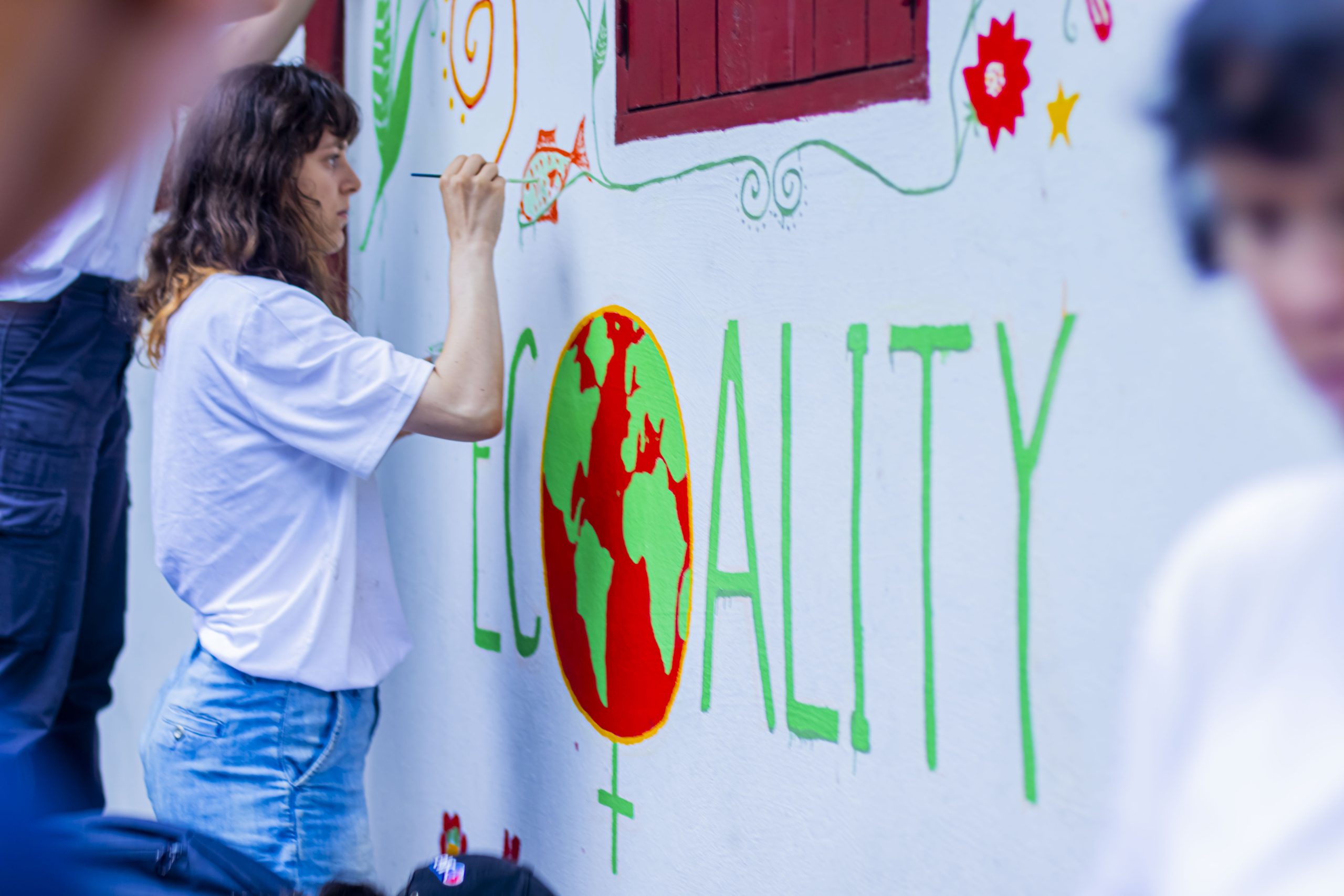
Last July ten young Europeans, us authors among them, got the opportunity to travel to Madagascar for a unique journey to connect internationally over global issues. We took part in an Ecoality-camp, which meant visiting Madagascar for ten days to learn from locals about the impacts of climate change and issues with equality, and all the work that is done to combat these complex and deeply intertwined issues.

Ecoality is an EU funded project, and as you could possibly decipher from its name, it focuses on the connection between climate change and gender (in)equality. This camp was one of many Ecoality activities, most of which take place locally around Europe. Since global responsibility and climate justice is central to the project, some camps have been taking place in countries in the Global South, which is where climate change hits the hardest.
Picture: Heaven Primo.

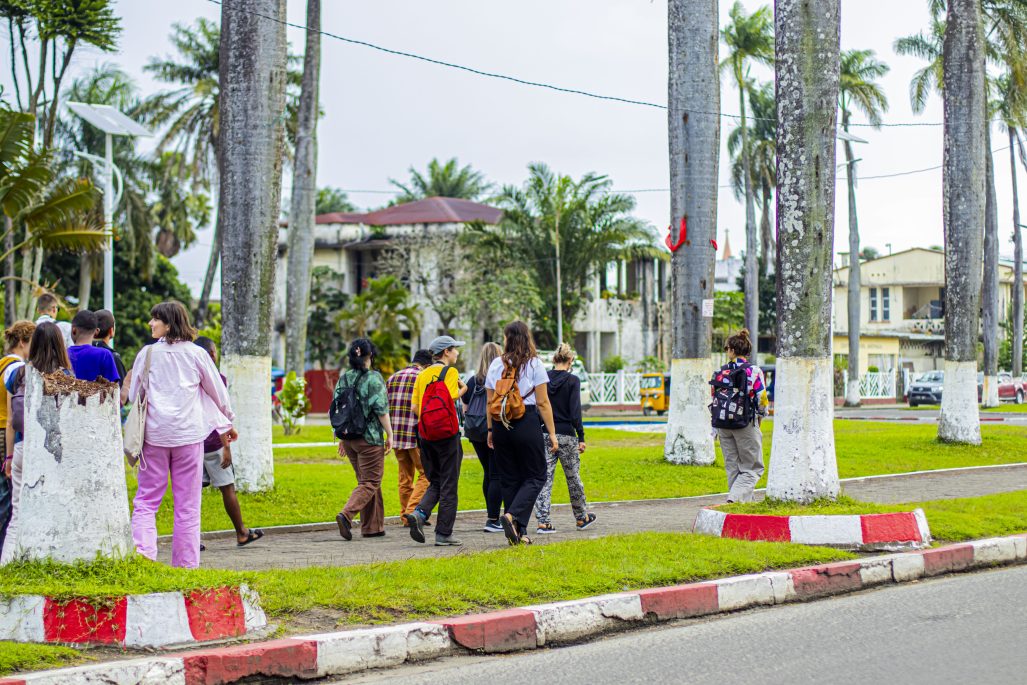
On 22th of July we flew to the capital Antananarivo and then spent the next day on a bus to reach our destination, the city of Toamasina. It seemed a bit contradictory to travel to the other side of the world to learn how climate change impacts local life, but to us this was a once in a lifetime opportunity to meet inspirational people on the other side of the planet. Our purpose there was to learn and then act locally upon return. All the camp’s participants planned their own actions aiming to mobilize their local communities.

In Toamasina we were hosted by a human rights education focused organization called Yes TafiTa. Their volunteers showed us around all week and told us about their work in the area. We met many other organizations, associations and local actors, and discussed the themes of climate change and equality with them. These conversations could have lasted a lifetime, since there was always much to talk about.

It is notable that nobody we met was in denial of climate change or downplayed its seriousness. They did not need to doubt the climate crisis’ realness since it has been their lived experience for years. Alarming stories of threats to food security due to the changing climate and scarcity of clean water were told. And this affects especially women since in many rural societies it is the women’s daily task to fetch water and prepare food. From an organization called Women Break the Silence, who bring forth the voices of those who have experienced gender-based violence, we heard how for example longer distances to fetch drinkable water result in bigger risk of sexual violence due to unsafe routes.

It is not always easy to do this kind of work in Madagascar. The conservative government and strong lobby from the church were mentioned several times when we discussed gender equality. The justice system was described as corrupt, and the informal economy employs 95% of the workforce. Being an activist can be life-threatening. There are many taboo subjects as well, like abortion and rape. The work these organizations do is crucial to changing views that are harmful to the safety and wellbeing of women. 

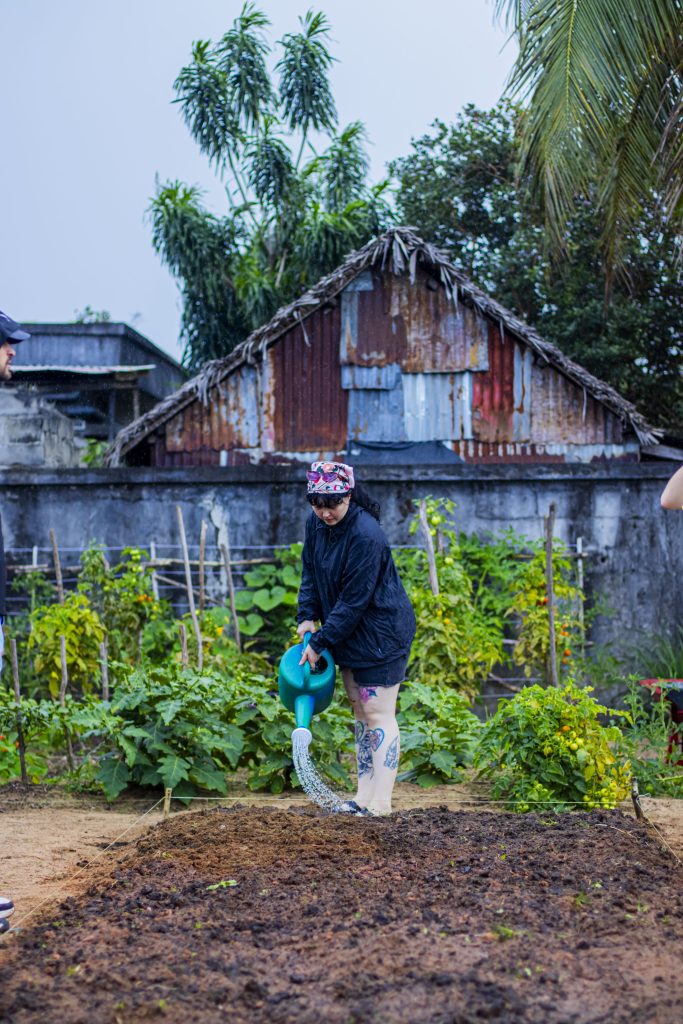
We met a woman who was doing her PHD on the subject of abortion in Madagascar and was a part of a political women’s group that brought gendered issues to the parliament. We met a women’s association that aimed to give jobs to fishermen’s wives due to fishing becoming an unstable job because of deterioration of fish populations. We met a man who travelled around Madagascar documenting which food plants are disappearing and which are mutating due to differences in climate. In a French union house we met workers who introduced local children to climate action by having a competition for eco-innovation and planning an Eco festival with participants from up to ten cities around the country making slam poetry about the environment to raise awareness.
Picture: Heaven Primo.

These examples show how much effort there is locally to make social and environmental change happen, despite the obstacles of an oppressive government and still prevailing coloniality. Recent news from Madagascar reports of massive protests which resulted in the president dissolving the government and fleeing the country. The Malagasy youth want change. It was clear during the visit, but it is intense to see it now from the screen. Protests have been deadly.

It may feel that all this commotion on the other side of the world is not something that relates to our reality. Nonetheless in the seeming safety and democracy of Finland, we experience indifference to social injustice and neglect of climate action. The climate crisis is here and we can now see loads of impacts such as life threatening heat waves and having less snow each year along with the deterioration of arctic ecosystems. Gender equality is not a solved issue either. The gender-based violence Finland is often at the top of EU-charts, and troubling stories from schools of misogyny running rampant are in headlines.

These are not only issues in some far away lands, yet our operating environment for civic action is far freer than in many other places. The fact that we can speak our mind, attend demonstrations and protest injustice is a right worth upholding. Recently a myriad of protests around the world have taken place: the Gen Z protests that spread from Nepal all around the world, notably in Indonesia, Philippines, Kenya, Morocco, Madagascar and Peru, as well as the No Kings -protests all over USA, which have been the largest protest in the country’s history. These protesters share the same concern about a future that looks bleak, but this unity brings hope to many. There is no room for apathy and paralysis.

Picture: Heaven Primo.

As Gen-Z ourselves we are doing our best to play an active role in visioning a more hopeful future. During our time in Madagascar, we met engaged teachers, who with little to no teacher training are managing dozens of classrooms and doing their best to address their student’s needs. These Malagasy teachers, together with teacher students based in Oulu are now launching the project “Glocal Pennant“. 

It is connecting Finland with Madagascar through school-based exchanges, in which English language classrooms in both countries will together online discuss what matters most to them. The pupils will bring their discussions afterwards into various spaces of their home city through art, text and dialogue. Through the exchange, pupils are practicing their intercultural competencies, including self-reflection and empathy, perspective-taking, dialogue, and critical thinking.

However, the bigger outcome from this project is that Youth voices would be listened to. A core principle of the project is to create bridges for groups that typically do not meet. This includes younger and older generations. And whilst respectful consideration should go both ways, it is especially important to us that younger, especially minor voices are being amplified, as they are the ones rarely ever asked or listened to in public debates. 

Early next year, the public of Oulu will be invited to join our events, including world cafes, open tables and an exhibition, where they get to interact with the pupils and their work and continue the conversation. The project aims to foster global empathy and a sense of connection to those seemingly far away from us – whether geographically, culturally, or generationally.

The project is organized by ITE (Intercultural Teacher Education) students and staff of the faculty of Education and Psychology and supported by the Peace Education Institute Finland and Ooka ry. We cooperate with teachers in Tomasina and Northern Finland, as well as volunteers in Oulu. The project also collaborates within a larger collection of different initiatives (with participation from for example Mobile Futures, Oulu2026 and Kaikkien Oulu) that aim to explore themes of antiracism, diversity, connection and belonging in Oulu.


Authors

Kerttu Kalliorinne is an environmental policy student from Oulu working on my thesis about ecofeminist activism. In internship at the Peace Education Institute I got to be a part of many Ecoality-projects.

Celine Okata is a student at the Faculty of Education and Psychology. In her free time, she loves to bake bread, go on hikes, and learn to play the cello.

Pictures by Heaven Primo.

An unforgettable studying experience in Finland doesn’t guarantee a career here

Pursuing a higher degree in Finland is indeed an attractive and promising prospect for foreign talent. Why wouldn’t it be? The Finnish education system isn’t one of the best for nothing. This plays a major factor leading many students to also consider a career in their respective fields in Finland. Speaking of personal experience, as […]

Pursuing a higher degree in Finland is indeed an attractive and promising prospect for foreign talent. Why wouldn’t it be? The Finnish education system isn’t one of the best for nothing. This plays a major factor leading many students to also consider a career in their respective fields in Finland.

Speaking of personal experience, as I have studied both in my home country and in Finland, the difference is quite noticeable. In many countries, the students are forced to memorize a massive amount of information, and then take exams based on their ability to recall that information. They could get good grades, but if you ask whether they learned anything, it probably wouldn’t be much.

That’s not the case in Finland. During my studies here, I’ve never felt any kind of pressure from teachers. They have always been supportive and flexible. They’ve also made sure to design the assignments in a way that the student would actually learn from them, rather than rotely memorizing.

The exams were never a verbatim copy of what the teachers taught in the classroom. I think their purpose was to ensure that the students were paying attention. Even if you failed, you would get a second and third chance to make it right, which kind of takes a load off the students’ mind.

I think it is great that the system was designed to give second chances since you can never really know why a student performed badly in an exam. Another positive aspect is that second chances aren’t just in exams, but in the courses overall. During one of the courses I took, I remember being just a few points away from the next grade. To help with that, I negotiated with the teacher to do some additional work to get those points.

Some courses offered alternatives for passing them, like writing an assignment or taking an exam. In the case of a student not doing well in an assignment, they can choose to take the exams, and vice versa. Such alternatives can be found listed in the University of Oulu’s Policies for the Recognition of Learning, for example. So, to those of you who are studying in Finland at the moment, you’ve come to the right place.

However, if you’re seeking a career here after that, I would advise you to think again and do your research.

Many of the foreign students coming to Finland want to stay here and pursue a career. But how useful is it to bring foreign talent here? Foreign employment has been promoted widely through frequent career fairs and workshops, but nonetheless, a lot of the talent goes to waste.

I know many people, myself included, who graduated here, but are unable to secure employment with their Finnish degrees for one reason or another. The most common example of such reasons is the “insufficient language skills”. As a person who speaks Finnish well enough, I don’t think that’s a good reason.

In many cases, we are rejected for no apparent reason, or are simply “ghosted” by the employers. We never get invited to interviews, and we always get the standard rejection message “Thank you for your application. We have received many great applications, but you were not selected this time”. Because of that, we lost the motivation to seek meaningful careers, and by that I mean careers corresponding to our education and acquired skills through that.

We had to settle for menial jobs like cleaning, paper delivery, and food delivery, just to live day by day and meet our financial obligations. I honestly see no sustainability here in terms of ensuring that these foreign job seekers get to contribute to the Finnish job market in their respective fields.

A master’s thesis written by Anthony-Claret Onwutalobi from Lahti University of Applied Sciences talked specifically about unemployed immigrant graduates from Finnish higher institutions. In his work, he indicated that 58% of the participants in his surveys said that they haven’t met their career expectations in Finland. Furthermore, the study showed that 56% disagree on the fact that the job market is welcoming for internationals, and 28% strongly disagree.

Onwutalobi also highlighted a very critical point, which was in regards to the factors that helped in securing employment in Finland. A very small percentage were able to land jobs through applying or through career services (7% and 11%, respectively), while a total of 77% got their jobs through networking or personal reference. Employers say they are open to foreign employment, but are they? If a foreign student can’t even land an internship with these employers, or simply an interview, how can they land a job?

A very important question needs to be asked; are international jobseekers not needed, or not wanted?

We unfortunately have heard of true stories regarding discrimination and injustice experienced by people with not just one, but two or three degrees and a proficiency in many languages, including Finnish. This leads many to believe that the latter is to be true: international job seekers are not wanted. Of course, there are some success stories by people who have made it, but that does not mean that the issue is nonexistent.

If highly educated foreigners involuntarily see a need to deliver food and newspapers, rather than working in their respective fields, then there is a major issue. Many individuals, Finnish people and foreigners alike, have highlighted this issue on a plethora of social media platforms, most notably on the employment-oriented LinkedIn. Hence, the issue’s existence is being acknowledged widely. However, has it been addressed sufficiently? Has there been extensive efforts to alleviate this issue?

We have yet to be proven wrong, but I sure hope we do.

Moaadh Benkherouf

A master's student in Northern Tourism at the University of Lapland, with a background in Environmental and Civil Engineering.

Lue lisää:

The other side of happiness – Finland for international students

Even though Finland is often viewed as paradise, being on an exchange doesn’t necessarily mean all your dreams come true. In Thea Yan Pan’s experience, there is also a dark side to happiness and to Finnish society.

Before coming to Finland, I had been expecting to find happiness here. From Beijing, China, I packed my dream for learning, curiosity for a good society, and the hard-gained residence permit, looking forward to starting my masters in the University of Oulu. 

Happiness came true very soon after I arrived here. I got to meet and study with an international group of students, listening to different languages, experiences, and perspectives. I went to the river sauna bathing in the last summer light and with spirited friends. I joined friendly and welcoming food gatherings and nature excursions accompanied by classmates, together grilling sausages and drinking glögi.

I lived in very affordable student housing and eat cheaply on campus with friends. I had informative, well-structured classes and many study assignments that were to help me learn. I even had a Finnish family who treated me even better than my own parents. (This is through the Kummi family program.) 

All of my basic needs are met. I have a community where I belong, get to study topics I like. Literally the best time of my life. In the past, I never knew what would make me happy. In the past years it was always hard work and struggle that guaranteed my survival and growth. 

But life never truly gives you just what you expected.

Even when happiness surrounds you so much. The other side of happiness, agony clings to you. 

It is the everyday experiences, shaped by the various social, economic, and institutional structures, through which we observe, understand, feel, and think, which also slowly lead to the development of more complex, nuanced, and even paradoxical ideas and sentiments. This is the case for my happiness experience which developed into other perceptions and feelings after some time. 

I tried to talk about these things and make sense of them with my foreign friends, but soon people would get tired of listening to my negativity and tell me to be positive and appreciate the system here, which is better than where we come from.

I started to feel confined by studying with the same small group of people for 6–8 hours each day. The river sauna stopped as the cold dark winter came. Though there is an indoor sauna, I never had the time to go. I found the classes to be too packed that I had no time or space to breathe or think. The stable, warm, affordable meals and homes are comfortable and readily accessible, but they put my life skills at no use.

There are city and social events, but I neither have money nor time to participate. I tried to talk about these things and make sense of them with my foreign friends, but soon people would get tired of listening to my negativity and tell me to be positive and appreciate the system here, which is better than where we come from. 

We are expecting a good experience in Finland, and people who live here know and believe that they are in paradise, compared to the other parts of the world. The newcomers and the locals believe in the same story of happiness. They run after happiness, interpret their life through the happy story, and find evidence for this conviction, even though sometimes the reality may lead to feeling otherwise: confined, sad, frustrated.

Then they would need to self-correct the negative feelings, or be reminded of the happy story to feel happy again. It seems as if in the discourse of happiness in Finland, unhappiness is seen as an unreal experience, especially for people coming from the “less developed”, “less democratic”, “non-welfare” countries. I felt as though it is a taboo to talk about or to be unhappy.

Increasingly, my change of perception made me feel agonized and confused.

Is it just because of me and my own problem? Is there nothing wrong with the environment that I am in? My eyes are open every day, wanting to see through the appearance of things. I see the people who want to stay happy, the ignoring or ignorance of problems, and the causes of my agony and painfulness: There is a fundamental lack of freedom in a comfortable, materially wealthy and orderly university environment. There is hidden inequality between the foreigners and the Finnish people. 

Why so? As students, we enter a “contract” with the university to go through a sophisticated, planned training process. Students want to get something for their personal goals. The university gets financial rewards for producing people with prescribed qualification standards by the state and corporations. Any activities that transgress or go beyond planned training processes are not encouraged by the university institution. We students are no in a position to define and decide existentially what to do for ourselves, or how to interact with the university institution. 

We students are no in a position to define and decide how to interact with the university institution. 

As foreigners, and especially non-EU foreigners, we have gone through strict screening process to prove we have good quality, innocent intentions, and financial capacity, and with luck, we enter the country. Many of us are financially depleted after going through all the immigration process and paying for tuition fees. For survival, either we have to find work in a competitive, depreciative, manual labor market, or live with a minimum budget that supports only food, accommodation, transportation and nothing more. 

Taking these reflections and analysis into consideration, could it be the happiness is a facade or illusion of reality? The reality differs from the single story of Finnish happiness. Not only there are unhappiness and unequal treatment, there are also exclusion and ‘unfreedom’. Behind the ‘unfreedom’ and inequality are significant structural issues. And those issues are so obscure and hidden, we almost don’t see them or we ignore them. I can’t help but wonder: Who possesses the right to happiness and dominates to discourse? What have we come to since we cannot talk about unhappiness? And even less so to talk about the social realities that often underlie this unhappiness. 

To solve the issue, the first step is to break the taboo. The second step is something much bigger.

Thea Yan Pan

Studying in the Education and Globalisation program. Originally from China and currently interested in collaborating with students from different faculties to make our university more sustainable.

Lue lisää: